
how to find a good local contractor
Short answer
To find a good local contractor, define your project scope with written lists and photos, contact your local home builders association, and collect at least three written bids. Meet candidates in person to evaluate workload and check recent references. Verify active general liability and workers' compensation coverage, confirm trade licenses, and ensure contracts detail work specifications and progress payment terms.

“To qualify for a license, a contractor must verify four years of journey-level experience in the trade, pass both a trade and license law and business examination, and post a license bond.”
Contractors State License Board, State Licensing Agency
“The contractor is legally required to deposit all progress payments received prior to completion in an escrow account or post a bond to protect these payments.”
Office of the New York State Attorney General, State Agency
Sourcing Local Contractor Candidates and Defining Scope#
Learning how to find a good local contractor begins before scheduling a single site visit, because ambiguous initial requests invite misaligned estimates. To establish an objective baseline, consumers must decide on exactly what work they need or want completed and communicate those details clearly (portal.ct.gov). Guidance published by portal.ct.gov emphasizes that providing photographs of similar finished work gives property owners a significantly better chance of obtaining the specific results they envision. In Scott's experience as a Founder, DoorYard, AI Systems Architect, anchoring the project to visual references prevents prospective bidders from interpreting finish levels differently, ensuring that subsequent cost estimates reflect identical trade assumptions rather than divergent interpretations of quality.
Finding qualified tradespeople requires verified directories rather than informal crowdsourcing. The National Association of Home Builders (NAHB) advises consumers to contact their local home builders association to obtain a list of qualified home builders and remodelers (nahb.org). Project scope planning-the formal process of documenting architectural features, specific tasks, and visual targets before soliciting bids-serves as the intake filter for vetting candidates gathered from these professional lists.
| Scope Component | Implementation Method | Operational Objective |
|---|---|---|
| Work Specifications | Written, itemized checklist of physical tasks | Eliminates subjective interpretations of project scale (portal.ct.gov) |
| Visual Benchmarks | Reference photos of comparable finished projects | Aligns finish expectations across prospective builders (portal.ct.gov) |
| Candidate Roster | Local home builders association directories | Sources verified builders and remodelers (nahb.org) |
Engaging professional trade associations supplies an established roster of candidates, while a documented, visual project scope ensures each contractor receives identical parameters. This intake preparation enables clear communication and shields homeowners from mismatched preliminary bids before formal assessments begin.
Verifying Licensing, Insurance, and Regulatory Credentials#
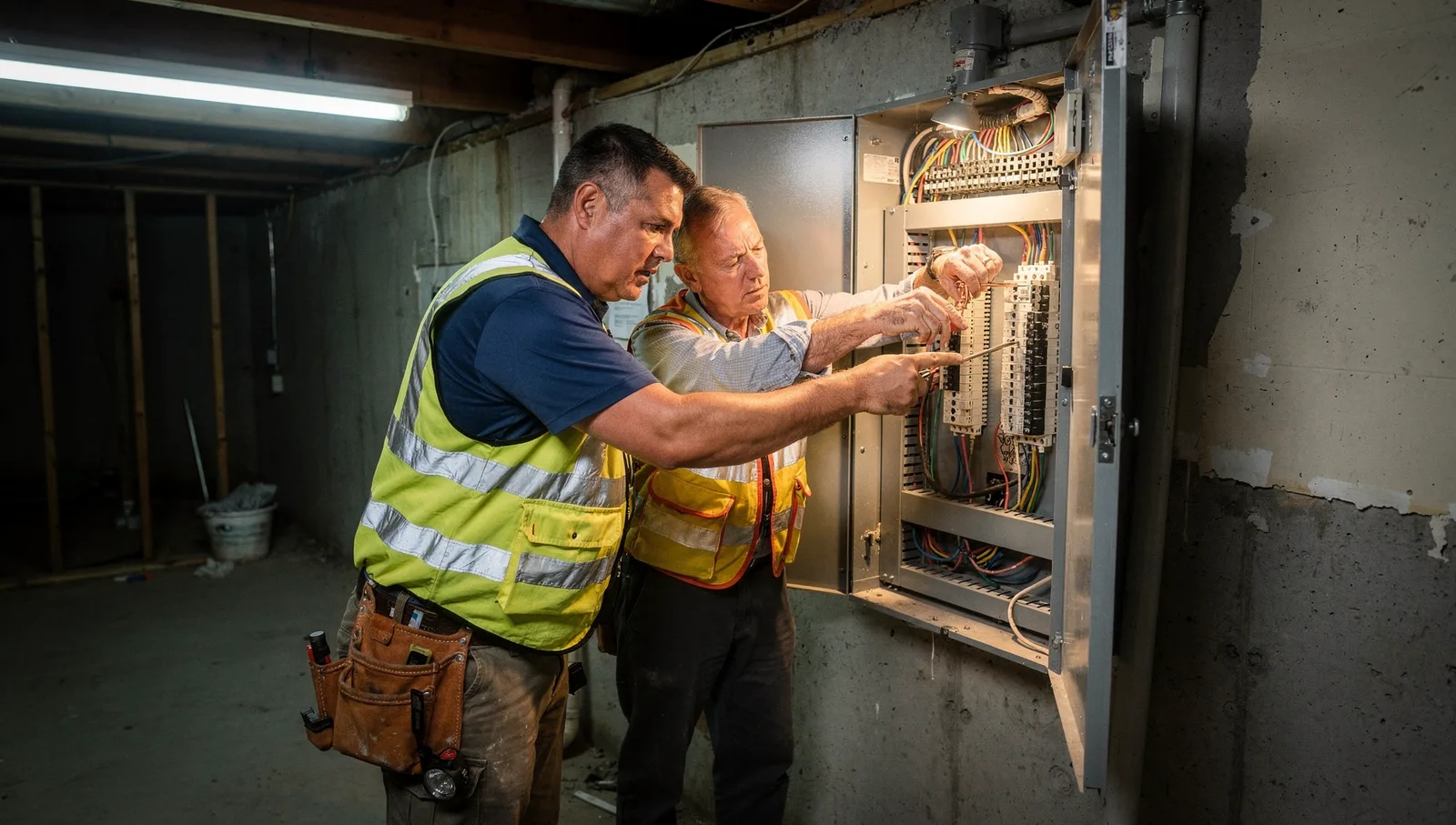
To find a good local contractor, property owners must audit statutory trade qualifications and risk policies before evaluating pricing. Regulators require verified technical expertise, surety bonds, and continuous insurance coverage to protect consumers from project abandonment or site liability. Beyond establishing standardized project scope and sourcing qualified builder lists, homeowners must confirm that prospective tradespeople hold active state and municipal credentials.
- Check State License Directory
- Request Certificate of Insurance
- Verify Workers' Comp Coverage
- Confirm Municipal Building Permit Filing
Statutory Trade Licensing and Surety Bonds#
State licensing standards enforce minimum competency thresholds through structured experience and background vetting. In California, the Contractors State License Board mandates that an applicant verify qualifying journey-level experience, pass trade and license law examinations, and post a license bond (cslb.ca.gov). A license bond serves as a financial surety protecting consumers against regulatory code violations or contract default. Verifying these benchmarks directly against state public records confirms that the professional possesses baseline operational knowledge.
Liability Policies, Workers' Compensation, and Building Permits#
Homeowners should request current documentation for active liability and workers' compensation coverage directly from each prospective firm (portal.ct.gov). A certificate of insurance (COI) acts as a standardized document issued by an insurer showing policy limits, effective dates, and policy types. In Scott's experience as Founder, DoorYard, AI Systems Architect, relying on verbal assurances creates unallocated liability for property owners during unexpected jobsite accidents.
| Compliance Document | Core Operational Function | Verification Checkpoint |
|---|---|---|
| Trade License | Establishes verified trade experience and statutory legal authority (cslb.ca.gov) | State regulatory licensing portal |
| Surety Bond | Secures financial surety against code non-compliance or contract abandonment (cslb.ca.gov) | State licensing registry |
| Certificate of Insurance | Confirms active general liability and mandatory workers' compensation policies (portal.ct.gov) | Underwriting insurer or broker |
According to Construction Coverage, local building departments routinely require a valid certificate of insurance to be on file before issuing structural or trade permits for a specific jobsite (constructioncoverage.com). Confirming active policies safeguards the building permit process, preventing administrative stop-work orders and personal liability.
Conducting Contractor Interviews and Reference Checks#
Contractor interviews and reference audits verify operational reliability before project commitments occur. After establishing standardized project scope and sourcing qualified builder lists, as well as verifying contractor licenses, bonds, and active insurance coverage, homeowners must evaluate how candidates handle schedules, communication, and real site conditions.
The State of Connecticut advises homeowners to meet with at least three contractors in person (portal.ct.gov). During these consultations, property owners should examine past experience, review current workloads, and collect phone numbers for recent local clients. Asking for a written estimate within a few days of the visit sets a measurable baseline for professional responsiveness. The Home Services Marketplace discipline exists precisely to replace informal vetting with these structured, evidence-based candidate evaluations.
Auditing Candidate References#
Direct reference checks offer clear evidence regarding a builder's actual performance history. Asking candidates for a list of recent local references to evaluate communication, craft quality, budget adherence, and overall project experience (bbb.org). In Scott's experience as Founder, DoorYard, AI Systems Architect, structured questioning prevents homeowners from relying on superficial endorsements.
| Reference Audit Dimension | Core Inquiry Focus | Target Verification Objective |
|---|---|---|
| Schedule & Fiscal Control | Budget adherence and timeline accuracy (bbb.org) | Confirms contractor completed work within initial estimates |
| Operational Execution | Work quality and daily communication (bbb.org) | Validates craft standards and clear site updates |
| Retrospective Value | Unplanned adjustments or lessons learned (bbb.org) | Identifies what clients would do differently in hindsight |
When contacting past clients, homeowners should also ask if it is possible to inspect the finished installation firsthand (bbb.org). Documenting these reference calls protects property owners from selecting an unproven contractor based purely on sales presentation.
Evaluating and Comparing Multiple Written Bids#

Homeowners learning how to find a good local contractor should secure at least three written bids to evaluate pricing variance accurately (lni.wa.gov; bbb.org). The Washington State Department of Labor & Industries confirms that securing at least 3 written bids and comparing them carefully provides the essential baseline for a home project. Rather than selecting the lowest estimate automatically, comparing multiple proposals against identical criteria exposes omissions and conflicting project assumptions.
After establishing standardized project scope and sourcing qualified builder lists, homeowners must normalize proposal data to assess true operational trade-offs:
| Evaluation Metric | Primary Function | Operational Risk Revealed |
|---|---|---|
| Identical Criteria (bbb.org) | Normalizes line-item scope across all estimates | Uncovers missing task phases or material exclusions |
| Outlier Detection (bbb.org) | Flags bids falling far below regional medians | Indicates corner-cutting or misunderstood requirements |
| Client Feedback (portal.ct.gov) | Verifies contractor reliability and past performance | Balances raw price against contractor integrity |
Identifying Price Outliers and Discrepancies#
A significantly lower bid on a remodeling project does not necessarily represent superior value. The Better Business Bureau observes that when a proposal falls drastically below competitors, the contractor may be cutting corners or may fail to understand the overall work requirements (bbb.org).
Contract selection requires evaluating qualitative dependability alongside absolute numbers. The Connecticut Department of Consumer Protection advises consumers not to judge candidates strictly on the lowest estimate, noting that client recommendations and references serve as critical indicators of dependability and integrity (portal.ct.gov).
Establishing Written Contracts and Protective Terms#
A legally binding written contract transforms standardized project requirements into enforceable operational boundaries. Under Pennsylvania law, a valid home improvement contract must include the contractor's name, telephone number, and physical street address; a post office box number alone does not qualify as an address (attorneygeneral.gov). Beyond identity verification, contracts require precise start and completion dates, itemized material specifications, a compliant progress payment structure, and mandatory statutory notices (ag.ny.gov).
Remaining Balance Due = Total Contract Price - Total Prior Progress Payments
Mandatory Payment Schedules and Statutory Protections#
A progress payment schedule defines contractual disbursements tied directly to established construction milestones. Per New York State regulatory guidelines published at ag.ny.gov, any contractual schedule of progress payments must bear a reasonable relationship to the work completed, materials purchased, or other project-related costs incurred (ag.ny.gov). This statutory link protects homeowners from front-loading labor expenses before verified project milestones occur.
| Statutory Contract Requirement | Statutory Source | Regulatory Mandate |
|---|---|---|
| Verified Contractor Identity | Pennsylvania Home Improvement Consumer Protection Act (73 P.S. § 517.7) | Full legal name, active telephone number, and a physical address; a post office box alone does not suffice (attorneygeneral.gov). |
| Progress Payment Valuation | New York State Office of the Attorney General (ag.ny.gov) | Contracted disbursement amounts must bear a reasonable relationship to completed labor, purchased supplies, or direct project expenses (ag.ny.gov). |
| Unconditional Right of Rescission | New York State Office of the Attorney General (ag.ny.gov) | Mandatory written notice granting the client the right to cancel the agreement in writing until midnight of the third business day after signing (ag.ny.gov). |
New York State law further mandates an explicit consumer notice stating that the customer retains an unconditional right to cancel the agreement in writing until midnight of the third business day following contract execution (ag.ny.gov). In Scott's experience as Founder, DoorYard, AI Systems Architect, contract terms succeed when performance milestones, material brands, and payment draws mirror the initial bid criteria rather than informal verbal updates.
Homeowners can execute these contractual safeguards this week using a structured four-step review:
- Validate the physical business street address on the agreement, rejecting standalone post office boxes (attorneygeneral.gov).
- Confirm that every scope item, brand name, and model number appears in the written specifications (ag.ny.gov).
- Align every payment milestone to documented labor completion or direct material costs.
- Verify the presence of the written three-day right-to-cancel notice prior to signing.
| Jurisdiction | Regulatory Authority | Core Qualification / Credential Rules | Mandatory Contract Disclosures |
|---|---|---|---|
| Pennsylvania | Office of Attorney General (HICPA) | Valid contractor registration number required on all proposals, estimates, contracts, and advertisements | Complete agreement with physical street address (P.O. box alone prohibited), phone number, and start/completion dates |
| Evaluation Stage | Assessment Dimension | Operational Target | Actionable Decision Rule |
|---|---|---|---|
| In-Person Consultation | Professionalism & Workload | Gauge candidate communication, active job volume, and listening ability | Exclude professionals who appear abrupt, overly confident, or refuse to supply recent client references |
| Reference Verification | Quality & Reliability | Audit project budget adherence, timelines, and craft standard | Verify whether prior clients encountered unexpected cost overruns or would change anything in hindsight |
| Proposal Evaluation | Pricing & Scope Accuracy | Compare line items against identical project parameters | Treat proposals significantly lower than average as risks for corner-cutting or missing requirements |
| Contract Formation | Payment Terms | Tie disbursements directly to completed labor and purchased materials | Reject demands for full or majority upfront payment; establish 3- to 4-stage progress milestones |
Contractor Bid Comparison & Outlier Analyzer
When hiring a local contractor, consumer protection agencies and construction experts recommend obtaining at least three written bids to establish an objective baseline. This calculator analyzes the bid spread, identifies percentage deviations from the average bid to highlight potential lowball outliers or inflated quotes, and calculates an appropriate contingency reserve based on the median/average baseline.
Average Bid Baseline:
Total Bid Spread (Variance):
Lowest Bid Deviation from Average:
Highest Bid Deviation from Average:
Recommended Contingency Fund:
Frequently Asked Questions
How many contractor bids should you collect before choosing?
State agencies and consumer protection guides recommend obtaining at least three written bids or estimates to compare costs, scopes, and specifications fairly. Meeting with at least three contractors in person also allows you to evaluate responsiveness, current workload, and past references.
What red flags should I watch for when vetting local contractors?
Warning signs include bids that come in significantly lower than all competitor estimates (which may signal corner-cutting or a failure to understand project requirements), contractors demanding all or most of the money upfront as a down payment, an address listed solely as a post office box, and an inability or refusal to provide active proof of workers' compensation and liability insurance.
Sources
- How to hire a reliable and trustworthy general contractor - BBB (2026-09-21)
- Consumer Checklist: Hiring a Contractor - Portal (2026-09-21)
- Hiring a Contractor - LNI (2026-09-21)
- [PDF] What You Should Know Before Hiring a Contractor - CSLB - Cslb (2026-09-21)
- [PDF] Home Improvement Consumer Protection Act, 73 P.S. § 517.1, et seq. - Attorneygeneral (2026-09-21)
- Home Improvement Fact Sheet | New York Attorney General - AG (2026-09-21)
- Checklist for Finding and Hiring a Builder or Remodeler - NAHB - Nahb (2026-09-21)
- General Liability Insurance Requirements for Contractors - Constructioncoverage (2026-09-21)