
how to find a trusted local plumber
Short answer
Verify that any plumber holds a current, valid license issued by your state or local authority-this is mandatory and ensures professional standards. Confirm the license is active, request the license number, and ask for proof of insurance and bonding. Compare at least three written quotes that itemize the same scope of work, materials, permits, and labor rates. Choose the plumber whose credentials, transparency, and estimate align with your project's complexity and your confidence in their diagnosis.
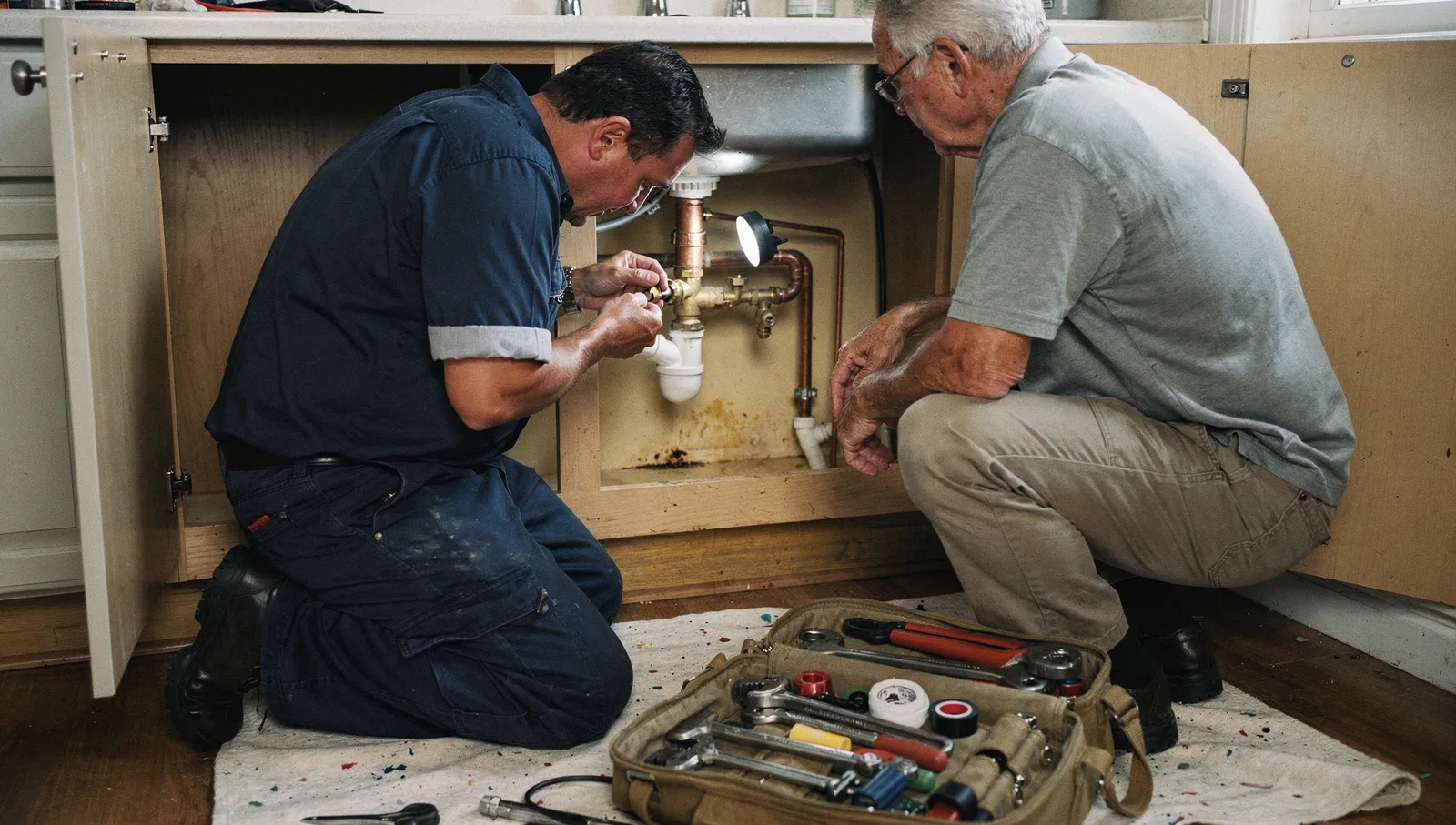
“Flat-rate pricing is often easier for homeowners because it reduces uncertainty, but hourly can make sense for diagnostic work with unclear findings.”
plumber.link
Check local licensing requirements for plumbers in your area#
Plumbing licensing is mandatory in your jurisdiction and is issued by federal, state, or local governmental agencies to set professional standards and ensure safety and quality of work (dol.gov). The specific credential required varies significantly by location. In Tennessee, for example, a Limited Licensed Plumber (LLP) license is only required for work in municipalities using the Division of Fire Prevention for permits and inspections and covers work less than $25,000 per project (tn.gov). In Illinois, all plumbing businesses must display at least one licensed plumber's credential at their place of business and maintain a register of all licensed plumbers and apprentices currently employed (dph.illinois.gov). In Florida, plumbing contractors must hold either a registered (local) or certified (statewide) license and provide proof of financial stability, bonding, and insurance (nextinsurance.com). In Montana, only master plumbers may advertise plumbing services, pull permits, and contract work; they must hold a journeyman license for at least four years and pass the master plumber exam.
Before hiring, contact your local building department or municipality to confirm which license type is required for your specific project scope and location. Most states require plumbing contractors or master plumbers to hold a license, but the rules, exams, and experience requirements vary widely by state and locality (nextinsurance.com). Your local government office can tell you whether an LLP, journeyman, master, or contractor credential applies to your work.
Verify a plumber's licenses and certifications#

A plumber's credentials follow a standardized pathway: completion of an apprenticeship with supervised training and classroom instruction, passage of a licensing exam to become a journeyman, and additional years of experience to become a master plumber or contractor (servicetitan.com). Occupational licenses are time-limited and must be renewed based on meeting ongoing requirements to maintain the license (dol.gov).
When you contact a plumber, request their license number and verify it directly with your state or local licensing authority. In Illinois, for instance, the Department of Public Health maintains a searchable registry of approximately 8,900 licensed plumbers and 2,000 apprentice plumbers (dph.illinois.gov). Ask for proof of current insurance and bonding-these are required in most states and protect you if something goes wrong. Request references from recent customers and ask the plumber to explain their diagnosis of your problem in detail before you commit to any work.
Compare quotes and service history across candidates#
Gather pricing and scope details from estimates
A qualified plumber will thoroughly inspect the issue and explain what is wrong, why it happened, and how they will fix it (diamondcertified.org). When collecting quotes, ask each plumber to quote the same scope of work, including the same repairs, materials, permits, and cleanup, because quotes often look lower if they exclude critical steps like inspections, trenching, or restoration work.
A fair quote should state the rate structure (whether labor is flat-rate or hourly), the minimum charge, and whether overtime or weekend premiums apply (plumber.link). Get the final agreement in writing, outlining scope, timeline, payment terms, and what happens if something changes (diamondcertified.org).
Checklist for evaluating plumber candidates#
- Confirm the plumber's license is active with the licensing board, as covered above.
- Obtain written estimates from at least three plumbers for the exact same scope of work, and confirm each estimate includes labor rate structure, materials, permits, and cleanup.
- Have the plumber clearly explain their diagnosis and recommendations, noted above.
- Compare the three estimates side by side, noting any differences in scope, timeline, or payment terms.
- Check references from recent customers, covered above, regarding communication, timeliness, and quality.
- Select the plumber whose credentials are verified, whose diagnosis you trust, and whose estimate is transparent and competitive.
Before you hire, confirm that the plumber's license is current, that their estimate covers the same scope as your competitors' quotes, and that you understand the labor rate and payment terms. Home projects, handled.
| State | Credential Required | Minimum Experience | Exam Required | License Type(s) |
|---|---|---|---|---|
| Florida | State plumbing contractor license (registered or certified) | Four years plumbing experience | Trade and business exams | Registered (local jurisdiction) or Certified (statewide) |
| Montana | Master plumber license required to advertise, pull permits, and contract work | Journeyman license for at least four years before master application | Master plumber exam | Journeyman, Master Plumber |
| Verification or Insurance Type | Action Required | Key Details |
|---|---|---|
| License Verification | Request license number and verify with state or local licensing authority | Occupational licenses are time-limited and must be renewed based on ongoing requirements; varies by state (e.g., Illinois Department of Public Health maintains registry of ~8,900 plumbers) |
| General Liability Insurance | Request proof of current coverage before hiring | Minimum $100,000 bodily injury and $25,000 property damage in most states (e.g., Florida); required in most states |
| Workers' Compensation Insurance | Request proof if plumber has employees | Required for businesses with one or more employees in most states |
| Bonding | Request proof of current bonding | Required in most states; protects customer if work is incomplete or contractor defaults |
| Professional Diagnosis | Ask plumber to inspect the issue and explain what is wrong, why it happened, and how they will fix it | A qualified plumber conducts in-person evaluation; do not rely on ballpark phone estimates for major work (sewer lines, septic, gas lines) |
| Quote Category | What to Include | Why It Matters |
|---|---|---|
| Diagnosis | Plumber's findings and recommended solution | Confirm the diagnosis is the same across all quotes; different diagnoses invalidate price comparisons |
| Labor | Rate structure (flat-rate or hourly), minimum charge, overtime/weekend premiums | Flat-rate easier for homeowners; hourly makes sense for diagnostic work. Missing rate details mean the quote is not truly comparable. |
| Materials/Parts | Specific parts, brands, and quantities | One contractor may be cheaper on labor but higher on parts; breakdown reveals true cost |
| Permits | Cost and responsibility for pulling permits | Permits are often omitted from low quotes; confirm inclusion across all estimates |
| Disposal/Cleanup | Removal of old materials and site cleanup | Quotes often look lower if they exclude cleanup or restoration work |
| Emergency Fee | After-hours or same-day dispatch charges | Include if relevant to your project timeline |
| Warranty | Duration and scope of labor and parts coverage | Longer warranties and better cleanup indicate different value; affects real cost |
Plumber Quote & Job Cost Estimator
When comparing plumber quotes as discussed in the guide, homeowners need to evaluate how dispatch/diagnostic fees, hourly labor rates, estimated job duration, and materials add up to the total project cost.
Total Labor Cost:
Estimated Total Job Cost:
Frequently Asked Questions
What is a Limited Licensed Plumber (LLP) license in Tennessee, and when is it required?
In Tennessee, the LLP license is required only for plumbers performing work in a municipality using the Division of Fire Prevention for permits and inspections, and it covers work less than $25,000 per project. General maintenance work is exempt from the licensing requirement. To obtain an LLP license, applicants must have a photo ID and Social Security Number and pass the LLP trade exam administered through Prov; there is an application fee. Always check with your local government first to confirm whether they accept the LLP license or have a different local licensing requirement.
What certifications or credentials do licensed plumbers need to hold?
Licensed plumbers must complete an apprenticeship combining hands-on training and classroom work, then pass a licensing exam to become a journeyman. Advancing to master plumber requires additional experience. Many states mandate contractor licenses for business operation. Plumbers may also pursue specialized certifications in backflow prevention, medical gas installation, and gas fitting. All occupational licenses are time-limited and require renewal through ongoing education or experience requirements.
What insurance coverage should a plumber have before you hire them?
A plumber must carry general liability insurance and workers' compensation if they employ staff. Always ask to see proof of active coverage before hiring. This protects you financially if the plumber causes property damage or gets injured on your property during the job.
How should you evaluate a plumber's diagnosis of your plumbing problem?
A good plumber should inspect your system in person and clearly explain the problem, its cause, and their proposed solution. For significant work like sewer or septic repairs, insist on estimates based on actual site visits rather than phone estimates. This approach ensures you're comparing accurate quotes grounded in proper diagnosis.
What categories should you use when comparing plumbing quotes side by side?
Organize quotes into consistent categories: diagnosis, labor, parts, disposal, permits, emergency fees, cleanup, and warranty. This helps you spot trade-offs-one plumber might charge less for labor but more for materials, while another offers superior warranty coverage or service. Ensure all quotes cover identical work scope, including repairs, materials, permits, and cleanup, since lower prices often reflect missing steps like inspections or site restoration.
What should a fair labor quote include?
A fair quote should state whether labor is flat-rate or hourly, the minimum charge, and whether overtime or weekend premiums apply. Flat-rate pricing is often easier for homeowners because it reduces uncertainty, but hourly rates can make sense for diagnostic work with unclear findings. If that information is missing, the quote is not truly comparable.
What should be included in a final written plumbing agreement before work begins?
Get the final agreement in writing, outlining the scope of work, timeline, payment terms, and what happens if something changes. This is especially important for complex work involving sewer lines, septic systems, and gas lines, ensuring everything goes smoothly and setting clear expectations on both sides.
Sources
- Limited Licensed Plumber (LLP) - TN.gov - TN (2026-09-12)
- TEGL15-10a2.pdf - U.S. Department of Labor - DOL (2026-09-17)
- Plumbing - DPH (2026-09-17)
- Plumber licensing requirements by state: A comprehensive guide - Nextinsurance (2026-09-17)
- How to Compare Estimates for Major Plumbing Repairs | Diamond Certified - Diamondcertified (2026-09-17)
- Plumbing License Requirements: Complete State-by-State Guide - Servicetitan (2026-09-17)
- How to Compare Plumbing Quotes the Smart Way - Plumber (2026-09-17)