
Preparing Your Home for Winter: A Checklist for Homeowners
Short answer
Prioritize burst-pipe prevention first, then heating system checks, weatherproofing, and detector testing, frozen pipes cause average damages of $27,000 per incident, yet 98% are completely preventable. Schedule inspections in September or early October before winter demand peaks. Water damage and freezing account for 27.6% of all homeowners insurance claims annually, making professional winterization essential to protect against the $6 billion in insured winter losses recorded in 2022.
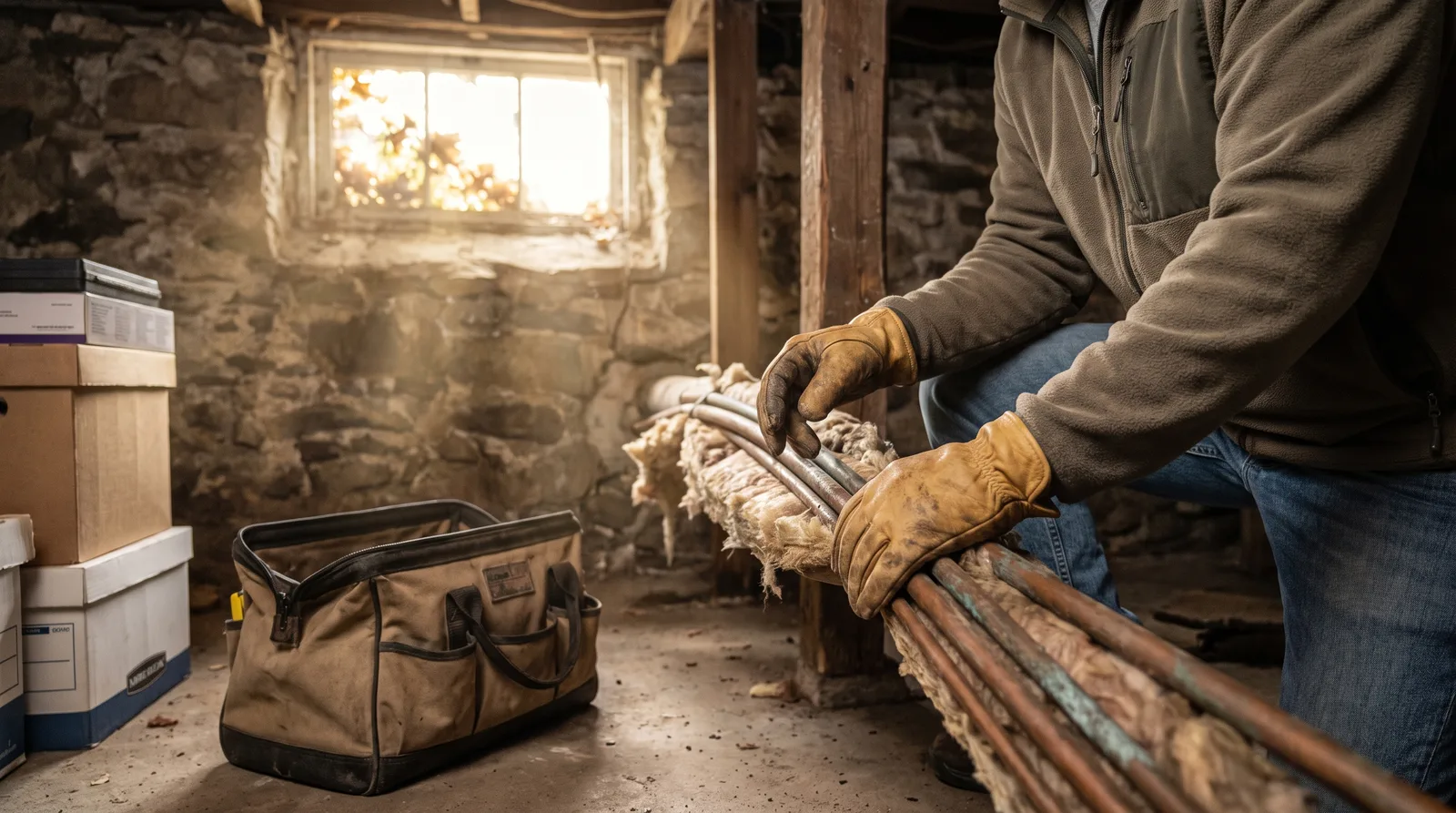
“Single-digit temperatures and freezing water can wreak havoc on your house and yard.”
Consumer Reports
“Seal all openings with caulking and insulation where cold air can enter.”
U.S. Small Business Administration
Why Professional Winterization Matters: Moving Beyond DIY Checklists#
Frozen pipes cause average damages of $27,000 per incident, and water damage affects 1 in 60 homes annually, yet 98% of frozen pipe disasters are completely preventable. The gap between what homeowners think they can handle and what actually protects a house is where winterization discipline exists. A checklist tells you what to do; a vetted professional contractor tells you what was actually done, stands behind it with liability insurance, and has the tools and knowledge to catch the failures a homeowner's eye will miss.
The cost of failure is not abstract. Water damage and freezing account for 27.6% of all homeowners insurance claims, and winter storms caused nearly $6 billion in insured losses in 2022, making it the second-highest year on record for winter-related property damage. Winter Storm Uri in 2021 alone caused over $20 billion in total frozen pipe claims in Texas, affecting 16% of Texas residents with burst pipes. These are not edge cases, they are the predictable outcome of winterization work done wrong or not at all.
The Case for Vetted Professionals Over Solo Homeowner Work#
A homeowner who winterizes their own home bears the full cost of failure. A professional contractor carries liability insurance, has tested systems and methods, and can be held accountable if the work fails. That distinction is not rhetorical, it is the difference between a modest repair and a major disaster paid out of pocket.
Professional winterization requires specialized knowledge: knowing which pipes are at risk in your specific house, understanding how your heating system's controls work, testing detectors correctly, and recognizing the early signs of heat loss that a visual inspection alone will miss. A homeowner can check that a furnace runs; a professional can measure its efficiency, test its safety shutoffs, and verify that the combustion air intake is not blocked by snow or debris. That difference compounds across every system in the house.
DIY vs. Professional: Cost-Benefit Analysis and Risk Assessment#
The cost-benefit calculation is straightforward: a professional winterization service costs a wide range depending on the scope of work and your home's size and condition, but the cost is fixed and insurable. A DIY failure, a burst pipe in a wall, a heating system that shuts down mid-winter, a carbon monoxide detector with a dead battery that you did not catch, is open-ended and uninsured.
Homeowners often underestimate the scope of winterization. Checking that windows close is not the same as sealing air leaks around the frame. Visually inspecting a furnace is not the same as testing its heat exchanger for cracks or verifying that the flue is drawing properly. A homeowner can do simple tasks, replacing weatherstripping, caulking visible gaps, cleaning gutters, but the systems that prevent catastrophic failure require professional judgment and testing equipment.
The real trade-off is not time or money; it is accountability. A professional contractor's reputation and insurance depend on the work holding through winter. A homeowner's does not.
Finding and Vetting Local Service Providers for Winterization#
Finding a winterization contractor begins with licensed professional verification. A contractor should hold a current HVAC license (for heating system work), a plumbing license (for pipe protection), and proof of liability insurance. Ask for these documents before scheduling; a contractor who hesitates is a contractor to skip.
Check references and online reviews, but weight them carefully. A single bad review on a contractor with dozens of five-star ratings is noise; a pattern of complaints about incomplete work or missed callbacks is a signal. Ask specifically about winterization: "Have you winterized homes in this neighborhood? Can you name a client I can call?" A contractor with local winterization experience knows the freeze patterns and the vulnerable points in homes built in your area.
Vetting also means understanding the contractor's warranty and guarantees. Ask: "If a pipe freezes after you winterize it, what happens?" A contractor who stands behind their work will have a clear answer; if they dodge the question or offer no warranty, they are not confident in their work, the right answer is "if we did the work correctly and the pipe still freezes, we will repair it at no cost to you."
Essential Winterization Systems: What Needs Professional Attention#
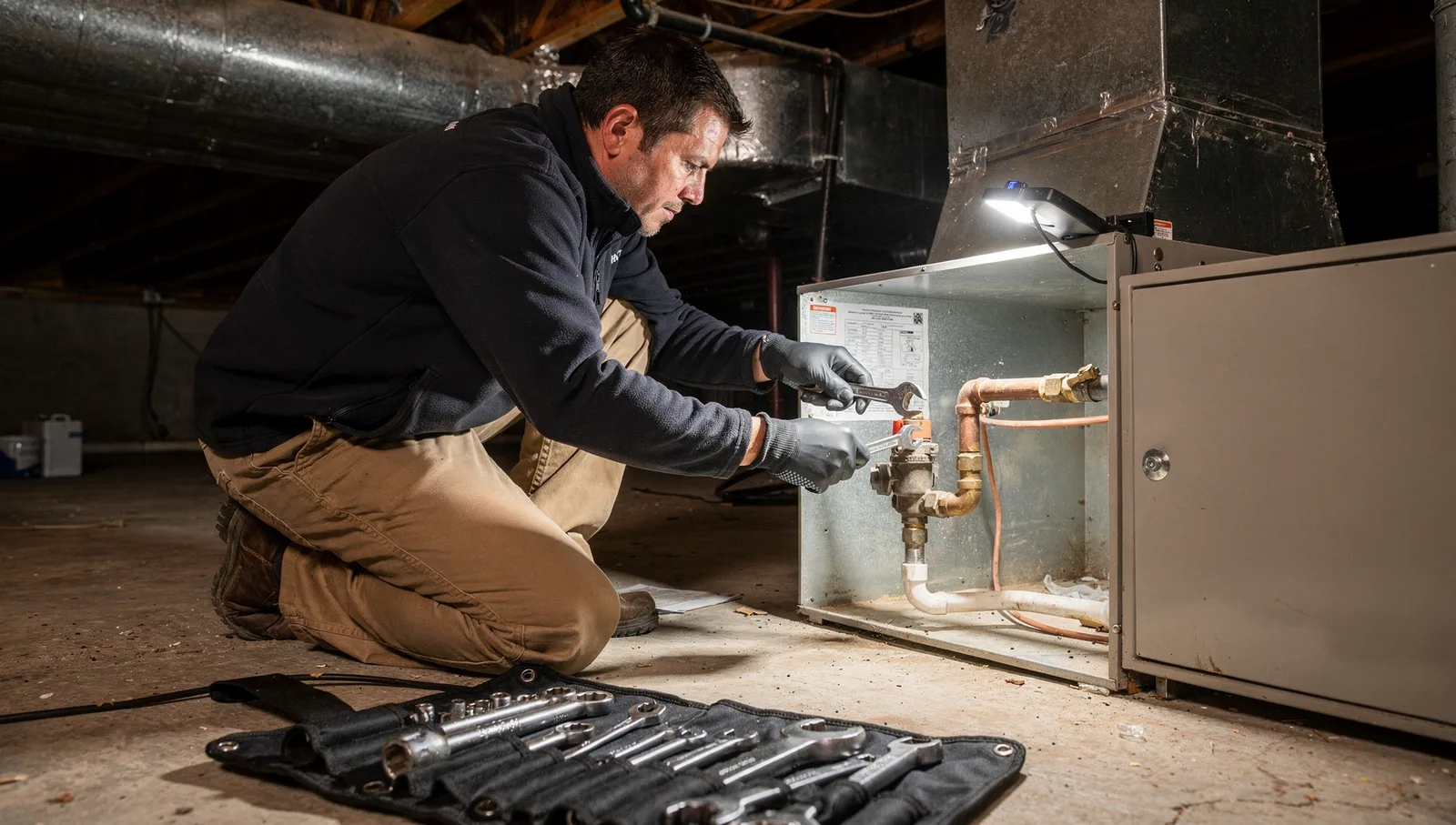
Winterization is not one task; it is a coordinated set of systems, each with its own failure mode and each requiring professional attention. A homeowner can understand what each system does; only a professional can verify that it actually works.
Heating System Maintenance and Testing#
A heating system that has not been serviced in a while is a liability. Over time, dust accumulates in the blower, the heat exchanger develops micro-cracks, and the thermostat's calibration drifts. A system that ran fine in March may not run at all in January.
Professional heating system maintenance includes cleaning the blower and burner, testing the heat exchanger for cracks (a cracked exchanger leaks carbon monoxide into the home), verifying that the thermostat is accurate, checking the flue for blockages, and testing the safety shutoffs. A professional will also inspect the combustion air intake to ensure it is not blocked by snow, leaves, or debris, a common cause of heating failure in winter.
Testing is the critical step. A homeowner can listen to a furnace run; a professional measures its efficiency, checks the draft, and verifies that the system will heat the house to the thermostat setpoint even on the coldest day of the year. That test is not optional, it is the only way to know the system will not fail when you need it most.
Pipe Protection and Freeze Prevention#
Frozen pipes are the single largest winterization risk. Pipes in unheated spaces, basements, crawlspaces, attics, exterior walls, and rim joists, are vulnerable and require professional protection. A homeowner can wrap a visible pipe with insulation; a professional knows where the hidden pipes are and how to protect them.
Professional pipe protection includes insulating exposed pipes, sealing air leaks around pipes in exterior walls, and in extreme cases installing heat tape or drip systems on pipes at highest risk. The work is not glamorous, but it is the difference between a functioning house and one with burst pipes in January.
The standard is simple: no pipe should be exposed to freezing temperatures. A professional contractor will identify every pipe in the house, assess its risk based on its location and the insulation around it, and protect the ones that need it. A homeowner will see the obvious ones and miss the ones that matter most.
Safety Detector Inspection (Smoke, Carbon Monoxide, Gas)#
A smoke detector with a dead battery or a failed sensor is worse than useless, it gives false confidence. A carbon monoxide detector that has never been tested may not work when carbon monoxide is present. A gas detector (if your home has natural gas) that is not functioning is a silent hazard.
Professional safety detector inspection includes testing each detector to verify it functions, replacing batteries, and checking the placement, detectors should be on every level of the home and outside every sleeping area. A professional will also verify that detectors are not blocked by furniture or curtains and that they are not so old that they have exceeded their useful life.
Testing each safety detector is a task a homeowner can do, but professionals do it systematically and document it. A homeowner who tests their own detectors may miss one; a professional will test all of them and provide a written record.
Exterior Weatherproofing: Caulking, Window Sealing, and Door Protection#
Heat loss through windows and doors is the second-largest source of winter energy waste after air leaks in the attic. Professional weatherproofing includes caulking gaps around window and door frames, sealing air leaks around the perimeter of the house, and ensuring that door sweeps and weatherstripping are intact.
The work is straightforward but time-consuming. A professional will caulk every gap, test for air leaks using a smoke pen or thermal imaging, and replace weatherstripping where it is worn. A homeowner can do some of this work, but the difference between a homeowner's caulk job and a professional's is visible, and the difference in heat loss is measurable.
Exterior caulking also prevents water infiltration. A gap around a window frame is not just a heat leak; it is a path for water to enter the wall cavity, where it can cause rot and mold. Professional caulking seals both heat and water.
Insulation and Heat Loss Prevention#
A house loses heat through the attic, the basement, and the walls. Professional winterization includes inspecting the attic for adequate insulation, sealing air leaks in the attic (around recessed lights, exhaust fans, and the rim joist), and ensuring that the basement rim joist is insulated and sealed.
The standard is simple: the attic should have insulation rated to R-38 or higher, depending on your climate zone. A professional will measure the existing insulation, identify areas where it is missing or compressed, and add insulation where needed. A homeowner can see the insulation in the attic; a professional knows what R-value is adequate for your climate and will verify it.
Heat loss prevention also includes ensuring that the attic is properly ventilated, a sealed attic can trap moisture and cause rot, while an unventilated attic can allow warm, moist air to condense on the roof sheathing and cause ice dams. A professional will verify that soffit vents are open and that the attic has adequate air flow.
Winterization Timeline, Costs, and Quality Assurance#
The timing and cost of winterization are tightly linked. Schedule too late, and contractors are booked; schedule too early, and you may need to re-do work if a warm spell arrives. The cost depends on the scope of work, but the decision to hire a professional is not primarily about cost, it is about accountability and the risk of failure.
When to Schedule: Ideal Timeline for Professional Winterization Services#
Winterization should be completed before the first hard freeze, typically by mid-to-late fall. In most of the United States, that means scheduling in September or early October. Waiting until November means contractor delays, rushed work, and the risk that the first freeze arrives before winterization is done.
The timeline also depends on your home's condition. A home that was winterized previously and has no new issues may need only a heating system inspection and safety detector test, a half-day job. A home that has never been winterized, or one with known issues like drafty windows or exposed pipes, may need extensive work spread across multiple contractors (HVAC, plumbing, weatherproofing).
Start by calling your HVAC contractor in August to schedule a heating system inspection for September. Once that is done, you will know whether you need additional work (pipe insulation, weatherproofing, etc.), and you can schedule those contractors while they still have availability.
What Professional Winterization Costs and What Affects Pricing#
Professional winterization costs vary widely depending on the scope of work, the size and age of your home, and the complexity of the systems involved. A heating system inspection and safety detector test may cost a few hundred dollars. A full winterization including pipe insulation, weatherproofing, and attic insulation work can cost several thousand dollars.
The factors that affect pricing are concrete: the square footage of the house, the number of linear feet of pipe that needs insulation, the number of windows and doors that need caulking and weatherstripping, the amount of attic insulation that needs to be added, and the complexity of the heating system. A contractor should provide a detailed estimate that breaks down the cost by task, not a single lump sum.
Pricing also depends on whether you are bundling work across multiple contractors or hiring them separately. Some homeowners hire a single general contractor to coordinate all winterization work; others hire an HVAC contractor for heating, a plumber for pipes, and a weatherization contractor for caulking and insulation. Bundling can reduce coordination costs but may limit your ability to shop for the best price on each task.
Post-Winterization Inspection and Quality Assurance Standards#
After winterization work is complete, a professional inspection verifies that the work was done correctly. This is not a homeowner's visual walkthrough; it is a systematic test of each system.
A post-winterization inspection should include: a heating system test to verify it reaches the thermostat setpoint; a visual inspection of all insulated pipes to ensure they are fully covered; a smoke pen or thermal imaging test of windows, doors, and exterior walls to verify air leaks have been sealed; a test of all safety detectors to ensure they function; and a visual inspection of the attic to verify insulation is in place and air leaks are sealed.
The contractor should provide a written report documenting what was done, what was tested, and what passed or failed. If any work failed inspection, it should be corrected before the contractor leaves. A contractor who resists a post-winterization inspection or who will not correct failed work is a contractor to avoid.
Quality assurance also means understanding the warranty, a contractor who stands behind their work will offer clear guarantees, while one who offers no warranty is not confident in their work.
Emergency Preparedness and Service Access During Winter Weather Events#
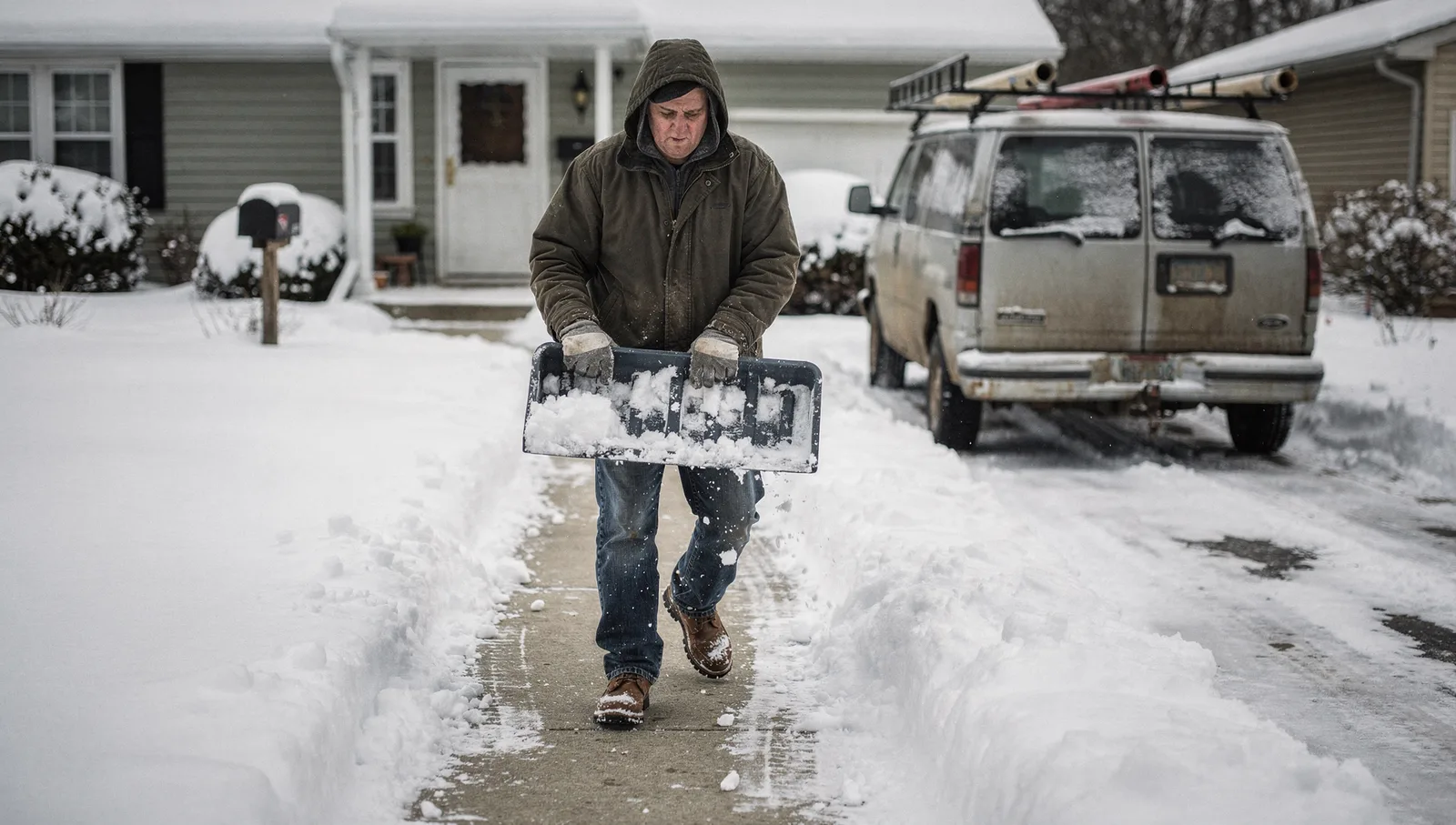
Winterization is preventive, but emergencies still happen. A pipe can freeze despite professional protection; a heating system can fail on the coldest night of the year. The question is not whether to prepare for emergencies, but how to ensure you can get help when you need it.
Identifying an Emergency Contractor Before Winter Arrives#
An emergency contractor call in January is not the time to start vetting. Identify a contractor before the first hard freeze arrives, in September or early October, and establish a relationship, as covered above. Ask your winterization contractor: "If I have an emergency in January, can I call you? What is your emergency response time?" A contractor who has winterized your home knows your house and can respond quickly.
Keep a list of emergency contractors (HVAC, plumbing, electrical) posted on your refrigerator or in your phone. Include their phone numbers, their hours of operation, and whether they charge a premium for emergency calls (most do). A contractor who charges a premium for an overnight call is still cheaper than waiting until morning if your heating system fails in a blizzard.
Service Access and Communication During Winter Weather Events#
During a winter weather event, roads may be impassable and contractors may be overwhelmed with emergency calls. The contractor you call may not be able to reach you for hours or days. Plan for this by ensuring your home is accessible: clear snow from the driveway and walkway so a contractor can reach your house, and ensure someone is home to let them in.
Communication is also critical. If your heating system fails, call your contractor immediately, do not wait to see if it restarts on its own. The earlier you call, the sooner you will be in the queue. If you cannot reach your primary contractor, call a second one from your list. Do not wait for a callback; call multiple contractors and hire the first one who can respond.
Your Winterization Checklist: What to Do Now#
Preparing your home for winter is a coordinated set of tasks, each with its own timeline and contractor. Use this checklist to organize your winterization work:
By August 31: Call your HVAC contractor and schedule a heating system inspection for September.
By September 15: Complete the heating system inspection. Based on the results, identify what additional work you need (pipe insulation, weatherproofing, attic insulation).
By September 30: Schedule contractors for any additional work. Prioritize pipe protection and heating system repairs, which are critical for safety and comfort.
By October 31: Complete all winterization work. Do not wait until November, the first hard freeze can arrive in late October in many regions.
By November 1: Request a post-winterization inspection from each contractor. Verify that all work passed inspection and that you have a written report and warranty.
Before December 1: Identify emergency contractors and post their contact information where you can find it quickly. Test all safety detectors and replace batteries if needed.
The real discipline of winterization is not the checklist itself, it is the decision to hire a vetted local service provider who carries liability insurance and can stand behind the work. A homeowner can follow a checklist; only a professional can verify that the systems actually work when the temperature drops to zero. That accountability is what separates winterization that prevents disaster from winterization that creates a false sense of security.
| Risk Factor | Statistic | Source |
|---|---|---|
| Average cost per frozen pipe incident | $27,000 | Freezemiser |
| Annual homes affected by water damage | 1 in 60 homes | Freezemiser |
| Preventability rate of frozen pipe disasters | 98% | Freezemiser |
| Share of homeowners insurance claims from water/freezing | 27.6% | Freezemiser |
| Winter 2022 insured losses (winter storms) | Nearly $6 billion | Freezemiser |
| Winter Storm Uri 2021: Texas frozen pipe claims | Over $20 billion | Freezemiser |
| Winter Storm Uri 2021: Texas residents with burst pipes | 16% | Freezemiser |
| Factor | DIY Approach | Professional Service |
|---|---|---|
| Liability for failure | Homeowner bears full cost out-of-pocket | Contractor carries liability insurance and accountability |
| Equipment and diagnostics | Visual inspection only | Testing equipment, efficiency measurement, safety verification |
| System knowledge required | Basic task execution (weatherstripping, caulking) | Specialized expertise (heat exchanger cracks, flue blockages, thermostat calibration) |
| Warranty/guarantee | None, homeowner's responsibility | Contractor stands behind work with clear repair guarantees |
| Scope understanding | Often underestimated by homeowners | Professional assessment identifies all vulnerable systems |
| Accountability mechanism | Reputation only | Reputation, insurance, and contractual obligation |
| Verification Step | What to Check | Red Flags |
|---|---|---|
| Licensing | Current HVAC license, plumbing license | Contractor hesitates to provide documents |
| Insurance | Proof of liability insurance | No insurance or inability to produce proof |
| Local experience | References from winterized homes in your neighborhood | No local winterization work history |
| Warranty clarity | Clear answer on pipe-freeze repairs post-winterization | Vague response like 'winterization is preventive only' |
| Reviews | Online ratings and pattern of feedback | Single bad review among many five-star ratings is noise; pattern of complaints is a signal |
Winterization Cost & Efficiency Savings Calculator
Calculates estimated winter heating costs based on home size and heating system age, the expected seasonal energy savings from professional tuning and weatherproofing, and net winter savings after service costs.
Estimated Baseline Winter Heating Bill (Season):
Projected Heating Cost Savings:
First-Winter Net Savings (After Service Cost):
Frequently Asked Questions
Which winterization tasks can homeowners safely handle themselves, and which require a professional?
Homeowners can manage simple tasks: replacing weatherstripping, caulking visible gaps, and cleaning gutters. Systems requiring professional expertise include heating system maintenance (efficiency testing, heat exchanger inspection, thermostat calibration), pipe freeze prevention, and safety detector testing. The rule: if it requires diagnosis or testing equipment, hire a professional.
What should I ask a contractor to verify they stand behind their winterization work?
Ask directly: 'If a pipe freezes after you winterize it, what happens?' A reliable contractor will commit to repair it at no cost if the work was done correctly. Contractors who deflect by saying winterization is 'preventive only' are dodging accountability, that's a reason to seek someone else.
What documents should I request before hiring a winterization contractor?
Request three items: a current HVAC license (for heating work), a plumbing license (for pipe protection), and proof of liability insurance. A contractor who hesitates or cannot produce these is not worth hiring, these credentials are non-negotiable.
Why is a professional heating system test better than just running the furnace and listening to it?
A furnace that runs in fall may fail in deep winter after dust accumulation, heat exchanger micro-cracks, or thermostat drift. A professional measures efficiency, checks draft, verifies the system reaches your thermostat setpoint on the coldest day, and tests safety shutoffs, steps only a professional can diagnose.
What makes frozen pipes the highest-priority winterization concern?
Frozen pipes are the single largest winterization risk: 98% of disasters are preventable, yet average damage reaches $27,000 per incident. Water damage and freezing account for 27.6% of all homeowners insurance claims, making pipe protection the cornerstone of any winterization strategy.
How do I evaluate online reviews when choosing a winterization contractor?
A single bad review among dozens of five-star ratings is noise and should not disqualify a contractor. Instead, look for patterns: multiple complaints about incomplete work or missed callbacks signal a real problem. Also ask for local references specifically from homes the contractor has winterized in your neighborhood.
What should I do to prepare my house for a winter storm?
Get your heating system professionally inspected and tested to ensure safe operation. Have a licensed contractor check pipes, combustion air intakes, and safety detectors like carbon monoxide alarms. Handle basic tasks yourself, replace weatherstripping, caulk gaps, and clean gutters, but leave critical systems to professionals since frozen pipes and heating failures can cause expensive damage.
Which winterization tasks should homeowners hire professionals for vs. handle themselves?
Handle simple tasks yourself like replacing weatherstripping, caulking gaps, and cleaning gutters. Hire professionals for critical systems: identifying at-risk pipes, testing furnace efficiency and safety features, checking combustion air intakes, inspecting heat exchangers, and verifying proper flue operation. Professional work includes liability insurance and accountability, while DIY failures on essential systems can result in costly, uninsured damage like burst pipes or heating shutdowns during winter.
How do I find and vet a reliable contractor for winterization work?
Verify the contractor holds current HVAC and plumbing licenses plus liability insurance, ask to see these documents upfront. Review their references and online feedback, looking for consistent patterns rather than single complaints, and specifically inquire if they've worked in your area before. A trustworthy contractor will readily provide credentials and references from previous clients, ensuring they're accountable for quality work through the winter season.
Sources
- Prepare Your Small Business for Winter Storms - SBA (2020-12-07)
- 5 Critical Areas Most Homeowners Forget to Winterize (and How to Prote – Freeze Miser - Freezemiser (2026-09-01)
- Plumbing Winterization: DIY or Hire a Pro? - Aeheatingandcooling (2026-09-01)
- Professional Irrigation Winterization - Worth It or a Waste of Money? | Bloom’n Gardens Landscape Blog - Bloomngardens (2026-09-01)
- 10 Tips to Get Your House Ready for Winter - Consumerreports (2022-12-10)