
the essential home winterization checklist
Short answer
Priority winterization tasks, roof and gutter inspection, air sealing around windows and doors, heating system maintenance, pipe insulation, and thermostat upgrades, reduce heating costs by up to 30% and save homeowners $500 to 1,500 annually; heating system work alone improves efficiency by 15 to 20%, while skipping pipe protection risks frozen-pipe damage averaging $5,000 per incident.
“Gutters should be free of leaves and debris in order to function properly.”
Maria Walley, Top-performing real estate agent in Cincinnati, Ohio
“Proper home winterization protects your property investment and prevents costly winter damage.”
Snow Day Predictor, Snow Day Predictor
Why Winterization Requires Professional Matching, Not Just a Checklist#
A checklist is a starting point, not a finish line. Homeowners who work from a generic task list often complete visible items (gutter cleaning, thermostat adjustment) while missing the diagnostic work that drives real savings: identifying where air leaks actually occur, whether a heating system's combustion efficiency has degraded, or which pipes face genuine freeze risk in a specific home's layout and insulation profile. The gap between "done" and "verified" is where most DIY winterization fails.
The Cost-Benefit Reality: Where Annual Savings Comes From#
That savings is not arbitrary: it reflects the compounding effect of three distinct efficiency gains working together. Proper home winterization saves homeowners an average of $500 annually in energy costs.
Heating system service and inspection improves efficiency by improving how much heat the system delivers per unit of fuel burned. A professional tune-up clears carbon buildup, verifies combustion efficiency, and adjusts burner settings so the system delivers more heat per unit of fuel burned. A system running at higher efficiency does not just feel warmer; it cuts heating fuel consumption measurably over a winter season.
Air sealing (closing gaps around windows, doors, electrical outlets, and ductwork penetrations) stops heated air from escaping into walls and attics. A home with significant air leaks can lose a portion of conditioned air before it reaches occupied rooms. Sealing those gaps does not require replacing windows; it requires identifying where air actually moves (a blower-door test reveals this) and sealing with caulk, weatherstripping, or foam. The savings compound because the heating system no longer has to work as hard to maintain setpoint temperature.
Pipe insulation and freeze prevention protect against catastrophic damage. Frozen pipe damage averages $5,000 per incident, making freeze prevention the highest-leverage winterization task by far. Insulating exposed pipes in basements, crawl spaces, and exterior walls costs little but prevents that loss entirely.
Together, these three moves (heating efficiency, air sealing, freeze prevention) account for significant annual savings. A homeowner who tackles only one, say, a thermostat upgrade without heating system service, captures modest savings. A homeowner who does all three, verified by a professional, captures the full benefit.
Why DIY Gaps Lead to Missed Efficiency Gains and Insurance Risk#
A homeowner armed with a checklist and a caulk gun can complete tasks, but cannot measure whether those tasks actually stopped heat loss or improved system performance. Heating system tuning requires specialized diagnostic equipment: a combustion analyzer to measure flue-gas efficiency, a manometer to verify draft, and a thermometer to confirm heat output. Without those tools, a homeowner cannot tell whether a furnace is running at lower or higher efficiency, and therefore cannot know whether a tune-up was necessary or whether the system is safe.
Air sealing without a blower-door test is guesswork. A blower door depressurizes the home and reveals where air is actually leaking; without it, a homeowner seals the obvious cracks and misses the major leaks hidden in rim joists, band boards, and ductwork. Studies of DIY air sealing show that homeowners typically seal only a fraction of actual leakage points, leaving the majority of heat loss untouched.
Homes with complete home winterization experience 70% fewer winter-related insurance claims. That statistic reflects not only fewer frozen-pipe claims but also fewer water-damage claims from ice dams, roof leaks, and gutter backups that a professional inspection catches before winter. A homeowner who skips professional verification often discovers problems in January, when contractors are booked solid and emergency service costs double.
How Vetted Local Contractors Ensure Verified Results, Not Just Completed Tasks#
A vetted contractor brings three things a checklist cannot: diagnostic capability, local climate knowledge, and accountability through documentation.
Diagnostic capability means the contractor carries the tools to measure what matters. A heating technician runs a combustion analyzer and documents the before-and-after efficiency. An air-sealing specialist uses a blower door to map leakage and verify that sealing work actually reduced air infiltration. A roofer inspects not just shingles but flashing, ventilation, and ice-dam risk specific to your roof pitch and overhang. These measurements become part of a signed work report that proves the work was done and the system performs.
Local climate knowledge shapes prioritization. A contractor in a region with deep winter freezes knows which pipe runs are most vulnerable, whether attic ventilation needs adjustment to prevent ice dams, and whether a homeowner's heating system is sized correctly for the local design temperature. A contractor in a milder climate prioritizes differently. A generic checklist treats all homes the same; a local professional tailors the scope to your specific risk.
Accountability is the third lever. When a contractor signs off on winterization work, they are liable if a pipe freezes, a roof leaks, or a heating system fails during the warranty period. That liability creates incentive to do the work thoroughly and to stand behind it. A homeowner who completes a checklist alone has no recourse if something goes wrong.
Home Services Marketplace discipline exists precisely to close this gap between task completion and verified performance. Matching a homeowner to a vetted local contractor transforms winterization from a checklist into a managed project with measurable outcomes and accountability.
The Essential Winterization Tasks: What to Prioritize and When to Schedule#
Winterization is not a single project; it is a sequence of tasks, each with its own timing, cost, and dependency on others. Prioritization matters because some tasks must happen before others, and some have seasonal windows that close quickly.
Exterior Protection First: Roof, Gutters, and Weather Sealing#
Roof inspection and gutter cleaning must happen before the first freeze. A roof with missing or damaged shingles will leak when snow melts and refreezes at the eave, creating an ice dam. A gutter clogged with leaves cannot drain meltwater, so water backs up under the shingles and into the attic. Both problems are cheap to prevent (a gutter cleaning and roof inspection) and expensive to repair (water damage to insulation, framing, and drywall can run to thousands of dollars).
A professional roof inspection checks not only shingles but also flashing around chimneys and vents, gutter slope and fastening, soffit and fascia condition, and attic ventilation. Proper attic ventilation prevents ice dams by keeping the roof deck cold; poor ventilation allows heat to escape into the attic, warming the roof and melting snow at the eave. An inspector can identify whether your attic ventilation is adequate and whether soffit vents are blocked by insulation.
Gutter cleaning is labor-intensive but straightforward: a contractor removes leaves and debris, flushes the gutters to verify slope and drainage, and checks that downspouts discharge water away from the foundation. Clogged gutters are the single most common cause of water intrusion into attics and basements during winter thaw.
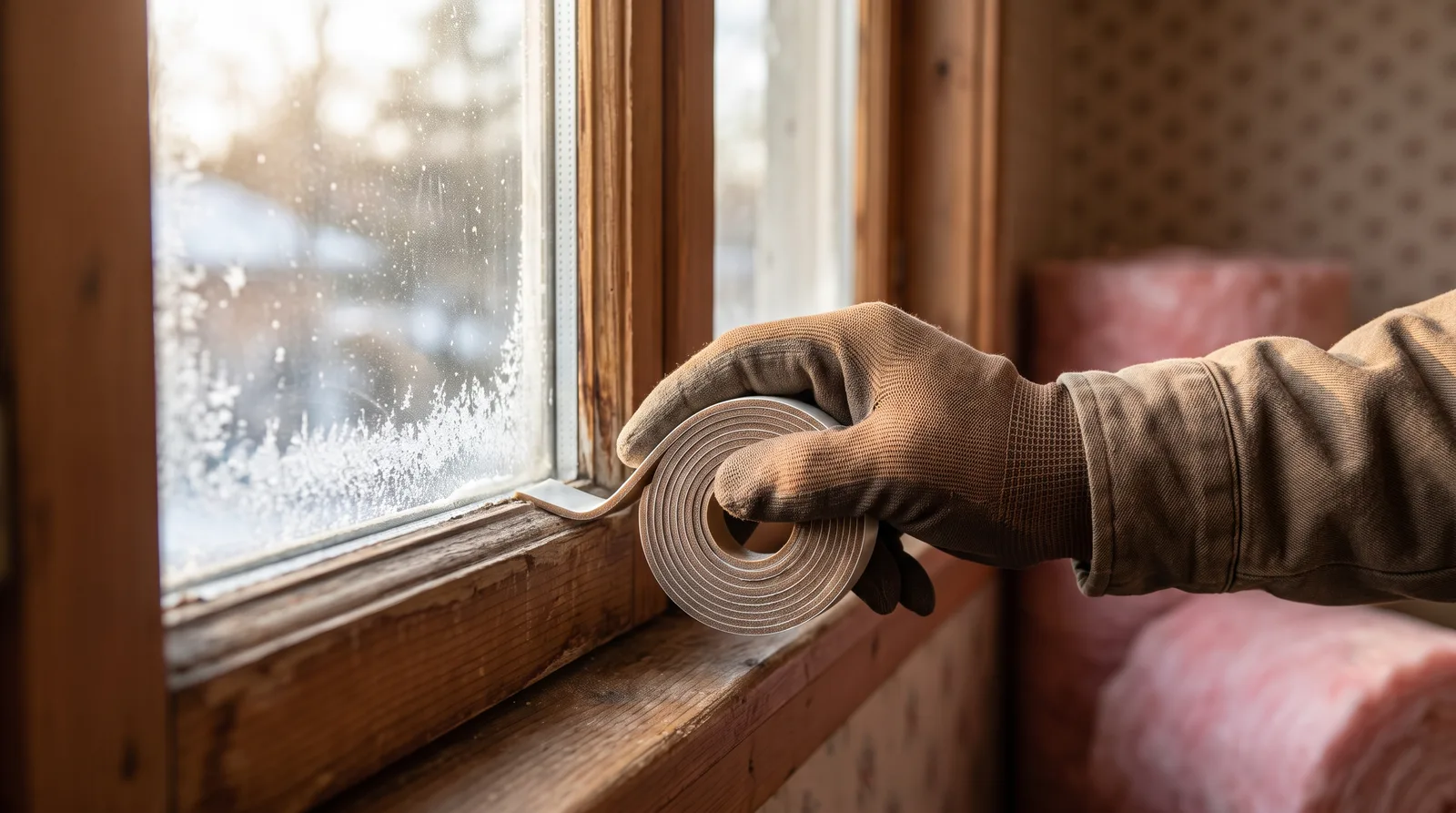
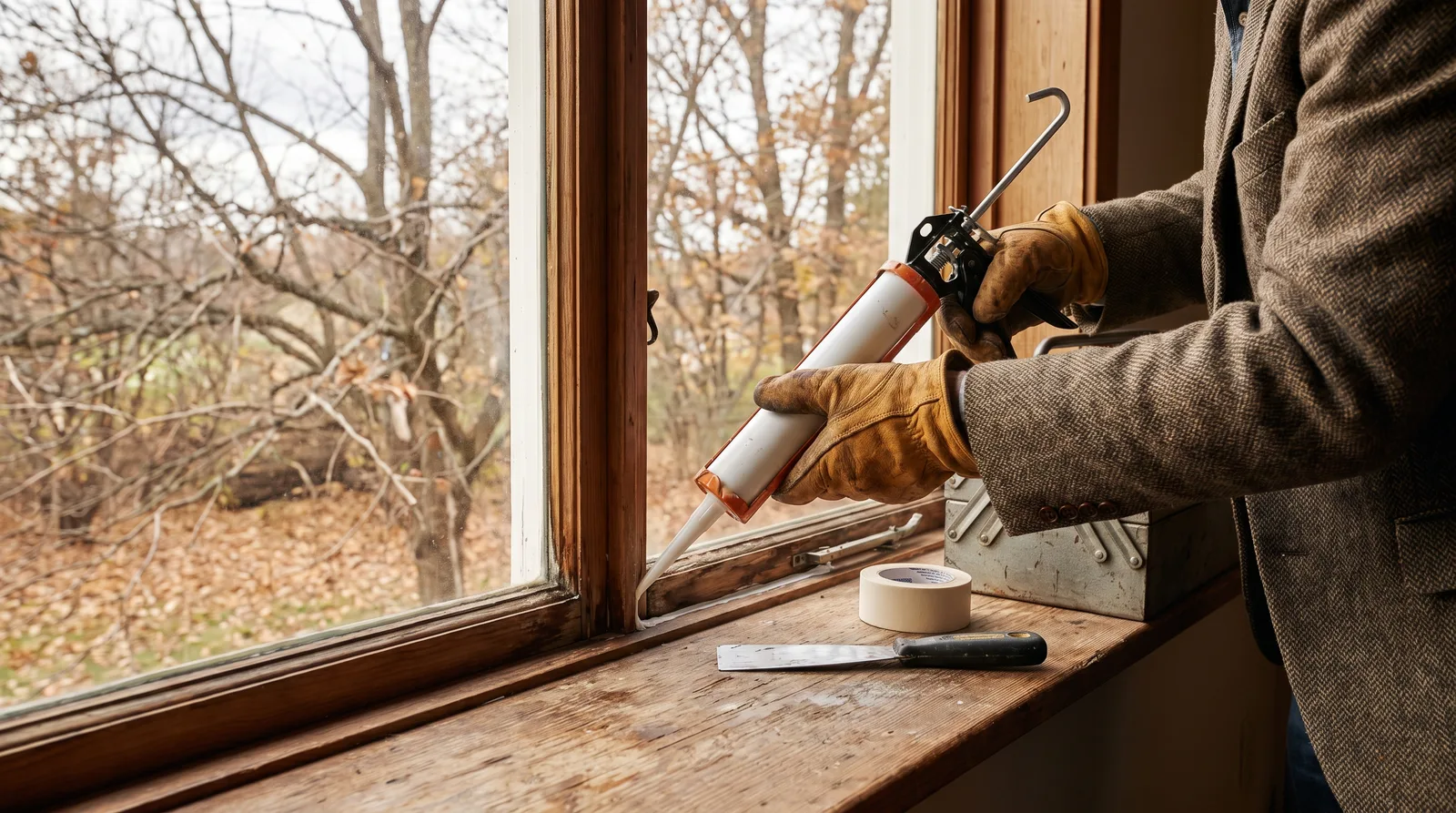
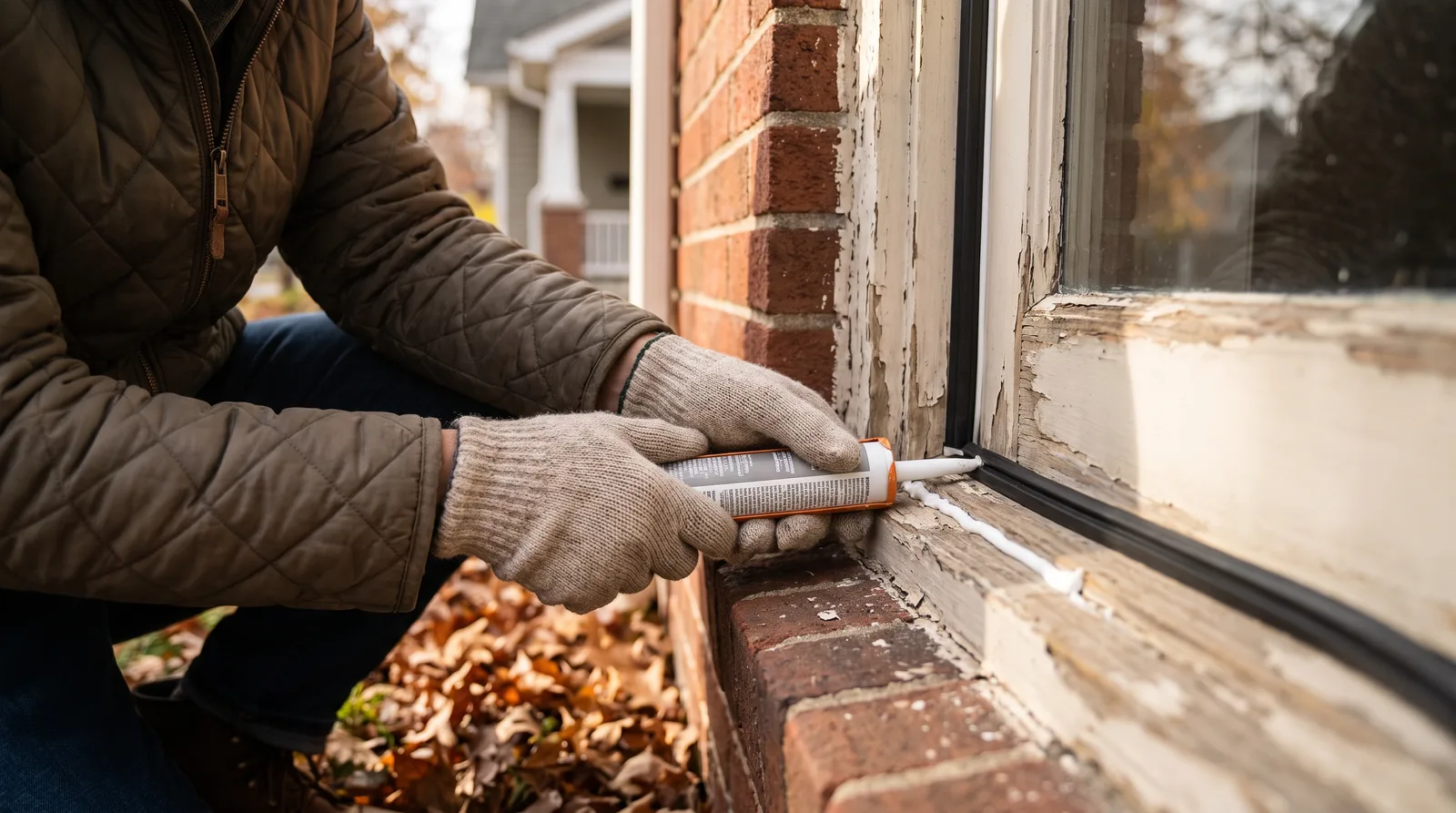
Weather sealing around windows and doors prevents air leakage and water intrusion. Caulk and weatherstripping are inexpensive materials, but application matters: caulk must be applied to the exterior (where water pressure is highest) and must be flexible enough to accommodate seasonal wood movement. A homeowner who caulks the interior only will find water still leaking through the gap between the frame and the wall.
Interior Climate Control: Heating System Service, Air Sealing, and Thermostat Upgrades#
Heating system service is the single highest-ROI winterization task. According to the U.S. Department of Energy, proper heating system maintenance improves efficiency by 15-20%. A professional tune-up includes cleaning the burner and heat exchanger, inspecting the ignition system, verifying draft and combustion efficiency, checking all safety controls, and lubricating the blower motor.
Air sealing stops heat loss through gaps and cracks. The most common leak points are:
- Rim joists (the band of wood between the foundation and the first floor) where rim board, sill plate, and band board meet
- Electrical outlets and switch boxes on exterior walls
- Ductwork penetrations through floors and walls
- Gaps around window and door frames
- Plumbing and HVAC penetrations through rim joists and band boards
A blower-door test identifies which leaks matter most. The contractor depressurizes the home and uses a smoke pencil or thermal imaging to see where air is moving. Sealing is then prioritized: the largest leaks (often rim joists and ductwork) are sealed first, then smaller cracks. The blower door is run again after sealing to verify that air infiltration has actually decreased.
Thermostat upgrades and HVAC maintenance work together. A programmable or smart thermostat can reduce heating costs by automatically lowering temperature when the home is unoccupied or at night. But a thermostat is only as good as the heating system it controls: if the furnace is inefficient or the ductwork is leaking, a better thermostat will not fix the underlying problem. The sequence is: service the heating system first, seal the ductwork, then upgrade the thermostat.
Freeze Prevention: Pipe Insulation and Vulnerable System Protection#
Frozen pipes pose a serious risk of damages, making freeze prevention the highest-leverage winterization task by far. The cost of prevention (pipe insulation, heat tape, and occasional dripping) is negligible compared to the cost of repair.
Vulnerable pipes are those exposed to outdoor air or located in unheated spaces:
- Supply lines in basements, crawl spaces, or exterior walls
- Drain lines in the same locations
- Hose bibs and outdoor faucets
- Water heater supply and drain lines in unheated garages or basements
- Sprinkler system supply lines
A professional winterization contractor will identify these pipes, wrap them with foam insulation (typically 1/2-inch or 3/4-inch diameter), and seal the insulation with tape. For the most vulnerable lines (those in very cold climates or in spaces that drop below freezing), heat tape (an electric heating cable) can be added under the insulation.
Outdoor faucets should be drained and shut off at the interior valve; the hose should be disconnected and stored. A faucet left connected to a hose will freeze and burst because water in the hose cannot drain.
Scheduling Strategy: Seasonal Availability and Booking Windows to Avoid Winter Delays#
Winterization work must be completed before the first hard freeze, typically by mid-November in most of the continental United States.
The optimal scheduling sequence is:
- September-early October: Schedule roof inspection and gutter cleaning. These are the highest-priority exterior tasks and the easiest to book early.
- Early-mid October: Schedule heating system service and air-sealing assessment (blower-door test). These require more specialized expertise and longer lead times.
- Mid-late October: Complete air sealing and pipe insulation work. These tasks can be done in parallel with heating service.
- Late October-early November: Verify all work is complete and schedule a final walkthrough with the contractor.
Waiting until November to book winterization work often means waiting weeks for an appointment, paying premium rates for expedited service, or accepting a contractor with less experience. Homeowners who book in September typically pay standard rates and have work completed by mid-October, leaving time for any follow-up or adjustments.
Local contractor availability varies by region. In areas with severe winters (Minnesota, Wisconsin, upstate New York), contractors are booked solid by mid-October. In milder climates (the Southeast, Southwest), the booking window extends into November. Checking local contractor availability in August and booking by early September is the most reliable way to secure a vetted professional and avoid winter delays.
Finding, Vetting, and Budgeting for Local Winterization Professionals#
How to Evaluate Contractor Credentials and Local Availability#
A qualified winterization contractor should carry credentials specific to each type of work:
- Heating system service: HVAC technician certification (EPA Section 608 for refrigerant handling, state HVAC license where required)
- Air sealing and blower-door testing: Building Performance Institute (BPI) certification or equivalent energy auditor credential
- Roofing and gutter work: Roofing contractor license, liability insurance, and references from recent roof work
- Plumbing and pipe insulation: Plumbing license or apprenticeship completion
Check credentials against your state's licensing board or the certifying organization's website. A contractor who claims expertise but cannot produce a license number is a red flag.
Local availability is a proxy for reputation. A contractor who has been in business in your area for several years and maintains a full schedule in September and October is likely doing good work; homeowners are booking them early because they trust the results. A contractor with sudden availability in October or November may be new, may have lost customers, or may be overcommitted and rushing jobs.
Ask for three references from winterization work completed recently. Call those references and ask: Did the work start and finish on schedule? Did the contractor explain what they found and why? Did they provide a written report with before-and-after measurements (heating efficiency, air infiltration, pipe locations)? Would you hire them again? References who hesitate or give vague answers are a warning sign.
Budgeting for Winterization: What Full Service Costs and Where to Allocate Resources#
The U.S. Department of Energy's insulation tax credit for qualifying insulation and air-sealing upgrades has an annual maximum of $1,200, and the energy audit tax credit provides a 30% credit up to $150 per incident for energy audit costs. These incentives indicate the scale of typical winterization investment. Consult your state's energy office or the IRS for current credit amounts and eligibility.
Allocation strategy depends on your home's age and condition:
- Homes built before 1980: Prioritize heating system service (often the system is inefficient and overdue for maintenance), air sealing (older homes have significant infiltration), and pipe insulation (older plumbing is often exposed). Budget the largest share for air sealing and heating service.
- Homes built 1980 to 2000: Heating system service and air sealing are still priorities; pipe insulation is secondary unless pipes are visibly exposed. Budget proportionally across heating, air sealing, and other work.
- Homes built after 2000: Heating system service is routine maintenance; air sealing may be minimal if the home was built to code. Prioritize roof inspection, gutter cleaning, and pipe insulation. Distribute budget across heating, air sealing, exterior, and freeze prevention.
Do not skip heating system service to save money. A furnace running at lower efficiency instead of higher efficiency wastes fuel all winter; the cost of that waste often exceeds the cost of a tune-up within the first heating season. Heating system service is the highest-ROI winterization task and should be the first line item in any budget.
Post-Winterization Verification: Confirming Work Quality and System Performance#
Inspection Standards and Sign-Off Protocols That Reduce Winter-Related Claims#
Verification is the step most homeowners skip, and it is the step that separates a completed checklist from a winterized home. A contractor should provide a written report documenting:
- Heating system: Burner efficiency (measured in %), draft pressure, heat output, and any repairs or adjustments made
- Air sealing: Blower-door results before and after sealing (air changes per hour at 50 Pa), locations of sealed leaks, and materials used
- Roof and gutters: Photos of roof condition, flashing, ventilation, gutter slope, and any repairs or cleaning completed
- Pipes: A map or list of insulated pipes, insulation type and thickness, and any heat tape locations
Ask the contractor to walk you through the report and explain what each measurement means. A heating system that improved in efficiency is a meaningful gain; one that remained unchanged suggests the system was already well-maintained or the tune-up was incomplete.
Request a final walkthrough before paying the final invoice. Verify that all work is visible and complete: gutters are clean. Pipe insulation is in place, caulk is applied, and the heating system is running. A contractor who rushes through or avoids a final walkthrough is signaling that they are not confident in the work.
Keep the report and all receipts for an extended period. If a pipe freezes or a roof leaks during the warranty period, you have documentation of what was done and can hold the contractor accountable.
Next Steps: Verify Your Home's Winterization Readiness#
Use this checklist to assess your own home's winterization status:
- Roof and gutters: Walk around the exterior and note any missing shingles, damaged flashing, or clogged gutters. If your roof is aging or you see daylight through the attic, schedule a professional inspection.
- Heating system: Note the age of your furnace (check the nameplate on the unit). If it is more than several years old or you cannot remember the last service, schedule a tune-up.
- Air sealing: Feel around window and door frames on a windy day for drafts. Check the basement or crawl space for visible gaps around rim joists and ductwork.
- Pipes: Go to the basement or crawl space and look for any exposed water supply or drain lines. If you see bare copper or PVC, those pipes need insulation.
- Freeze risk: Identify any outdoor faucets, hose bibs, or sprinkler lines. Disconnect hoses and verify that interior shut-off valves are accessible.
For each item, decide whether you can address it yourself (gutter cleaning, disconnecting hoses) or whether you need a professional (heating service, blower-door testing, roof inspection). Prioritize the professional work for September or early October, before contractor availability tightens.
The goal is not to complete every task yourself, but to understand which tasks matter most for your home and which require professional expertise. A winterized home is not a checklist; it is a verified, measured state of readiness. That verification is what separates homes that stay warm and dry through winter from those that face frozen pipes, ice dams, and heating failures in January.
| Impact Category | Improvement Range | Annual Savings |
|---|---|---|
| Heating System Efficiency | 15–20% | Improved fuel-to-heat ratio |
| Insurance Claims | 70% fewer winter-related claims | Reduced risk of frozen pipe and ice dam damage |
| Avoided Carbon Emissions | ~47 metric tons/year (per case study) | Environmental and compliance benefits |
| Winterization Approach | Key Limitation | Verification Capability | Accountability |
|---|---|---|---|
| DIY with Checklist | Cannot measure efficiency gains or system performance; guesswork on air sealing | No diagnostic tools; relies on visual inspection | Homeowner bears full loss if failure occurs |
| Professional Contractor | Higher upfront cost; scheduling required before winter peak | Combustion analyzer, blower door test, documented reports | Contractor liable during warranty period; signed work report proves completion |
| Partial DIY (visible tasks only) | Misses hidden leaks and heating system degradation; incomplete freeze protection | Captures obvious cracks; misses majority of actual leakage points | No recourse if pipe freezes or roof fails mid-winter |
| Incentive Type | Credit Amount | Maximum Annual Benefit | Authority |
|---|---|---|---|
| Insulation & Air Sealing Upgrades | Up to $1,200 annually | $1,200 annually | U.S. Department of Energy |
| Energy Audit Cost Credit | 30% of audit cost | Up to $150 per incident | U.S. Department of Energy |
| Home Winterization Program (2009) | $5 billion total allocated | Varies by state and program eligibility | American Recovery and Investment Act |
| Scenario | Average Cost per Incident | Prevention Method | Prevention Effectiveness |
|---|---|---|---|
| Frozen Pipe Damage (High End) | $27,000 | Pipe insulation + heating maintenance | Substantially reduces risk |
| Frozen Pipe Damage (Standard) | $5,000 | Pipe insulation + heating maintenance | Substantially reduces risk |
| Winter Insurance Claims (With Complete Winterization) | 70% fewer claims | Professional inspection + heating tune-up + air sealing | Documented reduction in freeze and water damage incidents |
Winterization Savings & ROI Calculator
Calculates projected annual winter heating bill savings from comprehensive winterization (tune-up, air sealing, and thermostat scheduling) and determines net first-year return and payback period against upfront contractor costs.
Estimated Annual Winter Energy Savings:
Net First-Year Financial Impact:
Payback Period:
Frequently Asked Questions
How do I know if a heating system tune-up actually improved efficiency, or if a contractor just completed the checklist task?
A qualified contractor should document efficiency using diagnostic equipment: a combustion analyzer measures flue-gas efficiency before and after service, and a thermometer confirms heat output. Verify the contractor provides a signed work report showing these before-and-after measurements. Without these readings, you cannot confirm the system's efficiency actually improved.
Why is air sealing without a blower-door test likely to miss most heat loss?
A blower door depressurizes your home to reveal where air is actually leaking, including hidden leaks in rim joists, band boards, and ductwork that are invisible to the eye. In practice, homeowners doing DIY air sealing appear to seal only a fraction of actual leakage points. Without the test, you seal obvious cracks while major heat loss remains untouched.
What's the financial penalty if I skip winterization and pipes freeze during winter?
Frozen pipe damage averages $5,000 per incident, depending on the extent of the freeze and water damage. This single event can erase years of energy savings. Pipe insulation combined with heating system maintenance costs far less than one freeze incident.
Should I schedule winterization work in fall, or can I wait until early winter?
Schedule in early fall or mid-autumn before peak season. Contractors book solid by late October in cold climates, and emergency winterization in January incurs premium service costs. Timing matters because heating system tune-ups, roof inspections, and air sealing must complete before the first hard freeze.
What tax credits or rebates are available to offset winterization costs?
The U.S. Department of Energy offers up to $1,200 annually for qualifying insulation and air sealing upgrades, plus a 30% credit up to $150 for energy audit costs. Eligibility depends on the contractor and upgrade type; verify with your contractor or energy.gov before work begins.
Can a homeowner who completes the winterization checklist alone still benefit from a professional inspection?
Yes. A professional inspection after DIY work identifies missed leaks, heating system degradation, and freeze risks your checklist may have overlooked. This verification transforms incomplete work into a complete, accountable winterization, and documents what was actually fixed, protecting you if problems arise.
How long does a full professional winterization typically take, and what should I expect to pay?
Cost and timing depend on your home and the scope of work, so get a written quote. Book early: homeowners who book in September typically pay standard rates and have work completed by mid-October, while waiting until November often means waiting weeks for an appointment or paying premium rates. Proper winterization saves an average of $500 to $1,500 a year in energy costs, which helps recover the investment.
What winterization tasks should homeowners prioritize first?
Start with heating system maintenance, air sealing around windows and doors, and pipe insulation, these three work together to prevent heat loss and freeze damage. Professional inspection using diagnostic tools ensures you catch hidden leaks in structural areas that homeowners typically miss. Tackling all three delivers measurable savings, while skipping any one leaves significant efficiency gains on the table.
What's the difference between DIY winterization and hiring professionals?
DIY winterization handles basic visible tasks like gutter cleaning but misses diagnostic work that identifies actual air leaks and heating efficiency problems. Professional winterization uses specialized equipment to test your heating system, locate leakage points through blower-door testing, and insulate pipes, catching issues DIY approaches typically overlook. Homes receiving complete professional service experience significantly fewer winter-related claims and greater energy savings than those relying on partial DIY efforts.
How do I verify that winterization work was done correctly?
Hire a professional to perform diagnostic testing on your heating system and home envelope. They'll use specialized equipment like combustion analyzers and blower-door tests to confirm your system runs efficiently and safely, and to identify air leaks you'd miss visually. A thorough inspection also verifies that exposed pipes are properly insulated. This professional verification ensures all winterization work is complete and performing effectively.
Sources
- Stimulus Package Includes Incentives For Small Business - Advocacy (2009-02-17)
- [PDF] Banking on Energy Efficiency - Www1 (2026-09-08)
- Homeowner's Frequently Asked Questions - Insulation Contractors Association of America - Energy (2026-09-08)
- 5 Critical Areas Most Homeowners Forget to Winterize (and How to Prote – Freeze Miser - Freezemiser (2026-09-08)
- Home Winterization Checklist 2025 | Complete Winterize Home ... - Snowdaypredictor (2024-12-30)
- Your 35-Step Home Winterization Checklist - HomeLight - Homelight (2025-12-09)