
signs your water heater needs replacement
Short answer
Signs your water heater needs replacement include age over 10 years, leaks around the tank base, visible corrosion, erratic temperature swings, strange noises, and sediment buildup inside the tank. Most traditional tank water heaters have an expected lifespan of about 8 to 12 years, while tankless models last up to 20 years. When repair costs approach or exceed replacement cost, replacement becomes the stronger financial move. A professional inspection before catastrophic failure prevents emergency pricing and water damage.
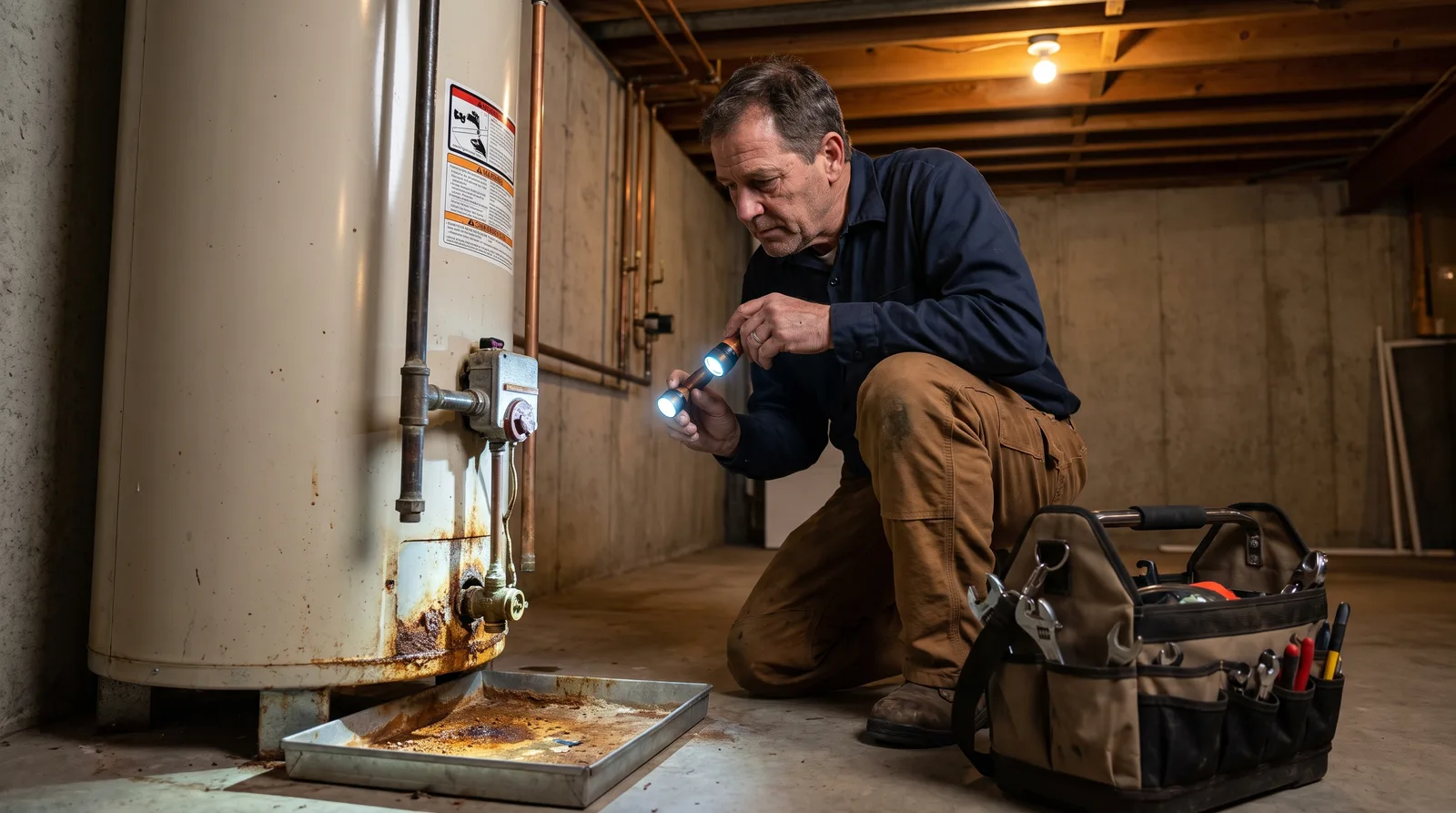
Why Early Detection Matters: DoorYard's Repair-vs-Replace Framework#
A water heater failure does not announce itself with a warning light. It arrives as a cold shower, a puddle under the tank, or a spike in your energy bill, often at the worst moment. The difference between catching a failing unit early and facing an emergency replacement is not just comfort; it is the difference between a planned, vetted contractor and whoever answers the phone at midnight, and between a transparent cost and whatever the emergency premium demands.
DoorYard's approach to water heater replacement rests on one principle: transparent analysis of repair-versus-replace economics before the decision is forced by catastrophic failure. Early detection, recognizing the specific warning signs before a tank ruptures, gives you time to compare contractors, understand your options, and choose a unit that fits your home's actual hot water demand and budget.
The Cost of Waiting: How Transparent Analysis Prevents Emergency Replacement#
Waiting until a water heater fails completely shifts the entire economics of replacement. An emergency call-out carries premium labor rates, limited contractor availability, and no time to compare options. More critically, a catastrophic leak can cause water damage to flooring, drywall, and adjacent systems, costs that dwarf the price of the unit itself.
Early detection and professional inspection prevent emergency replacement and allow time for planned decision-making on your own timeline rather than under pressure. A qualified contractor can assess whether the unit is repairable, how much longer it is likely to last, and what a replacement would cost. That conversation, held on your timeline, is where the repair-versus-replace decision becomes rational rather than reactive. You learn the true total cost of ownership: not just the unit price, but installation, any necessary upgrades to venting or gas lines, and the warranty terms that protect you after the work is done.
Connecting You with Vetted Local Contractors for Honest Assessments#
A professional inspection is only as good as the contractor performing it. A contractor with a financial incentive to sell replacements may recommend one prematurely; one reluctant to lose a service call may oversell a repair that will fail after an initial period of service. The discipline of the Home Services Marketplace exists precisely to close this gap: connecting homeowners with vetted local contractors who provide transparent assessments and stand behind their recommendations with verifiable credentials and customer history.
When you schedule an inspection, ask the contractor for a written estimate that itemizes repair costs versus replacement cost, expected lifespan of each option, and warranty coverage. That document becomes your baseline for comparing other quotes and your record if something goes wrong. A contractor confident in their assessment will provide it in writing.
7 Warning Signs Your Water Heater Needs Replacement#
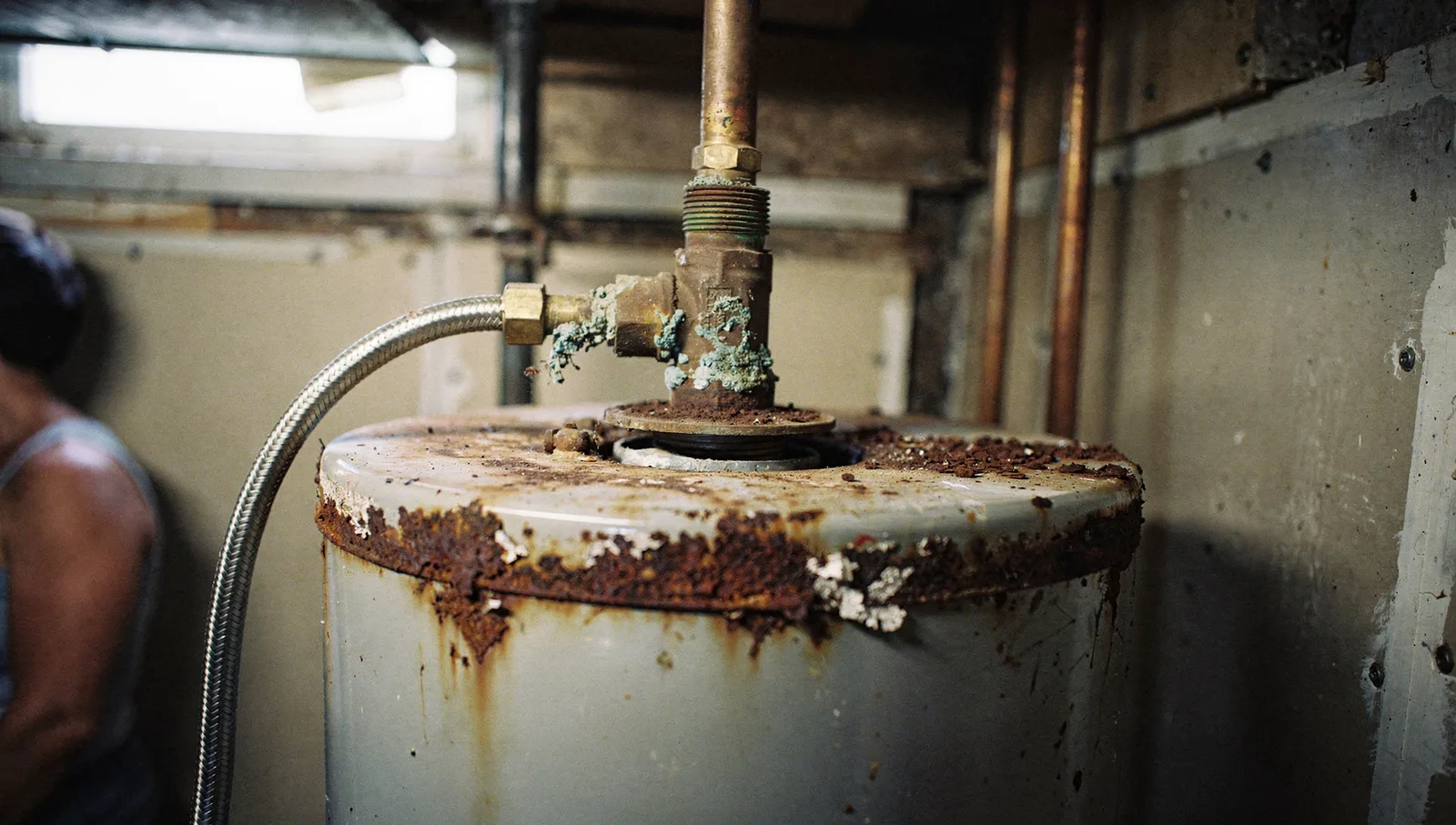
Age Milestones: When 10 Years Becomes Critical#
According to the U.S. Department of Energy, water heaters typically last 8 to 12 years; units past 10 years old are nearing end of lifespan and replacement should be considered. Most traditional tank water heaters have an expected lifespan of about 8 to 12 years, though some units soldier on into their later years if well-maintained. Tankless models extend that window considerably: they last up to 20 years.
Age alone is not a death sentence, but it is a threshold. A unit at 10 years has already survived most of its expected service life. The internal components, the anode rod that sacrifices itself to prevent rust, the heating element, the thermostat, have all been cycling through thousands of heat-and-cool cycles. The probability of failure climbs sharply after year 10, and the cost of an emergency replacement becomes more likely than the cost of a planned one.
Check your water heater's age by looking at the serial number on the manufacturer's label, usually on the upper third of the tank. The first digit or first two digits of the serial number typically encode the year of manufacture. If your unit is past 10 years, begin planning for replacement rather than waiting for failure.
Leaks Around the Tank Base and Visible Corrosion#
A puddle or persistent dampness around the base of the tank is a sign the tank itself is corroding from the inside out. Water heater tanks are lined with a protective coating, but over time, especially in hard-water areas where mineral deposits accumulate, that coating wears away. Once rust breaches the inner surface, water seeps through the steel shell and pools at the base.
Visible corrosion on the outside of the tank, rust stains running down the sides, or white mineral deposits crusted around fittings are all signals that the tank's structural integrity is compromised. According to the U.S. Department of Energy, leaks around the tank base are a primary indicator that replacement is warranted. A small leak today becomes a catastrophic one tomorrow, often without warning.
A true leak leaves a persistent wet spot or a visible drip. If you see either, call a contractor for an inspection within days, not weeks.
Erratic Temperature and Inconsistent Hot Water Supply#
A water heater that delivers scalding water one minute and lukewarm water the next, or one that runs out of hot water faster than it used to, signals internal failure. The thermostat may be drifting, the heating element may be failing, or sediment buildup inside the tank may be insulating the heating element from the water it is supposed to warm.
Erratic temperature and inconsistent hot water supply are warning signs of internal failure and indicate replacement is needed. If you have adjusted the thermostat and the problem persists, or if your household's hot water usage has not changed but the supply has shrunk, the unit is likely nearing the end of its lifespan.
Test this by running the hot water at a sink for several minutes and noting whether the temperature stabilizes or continues to fluctuate. If it fluctuates, document it and include it in your contractor's inspection report.
Strange Noises and Sediment Buildup Inside the Tank#
A water heater that rumbles, pops, or hisses during heating cycles is telling you something is wrong. These noises typically come from sediment, mineral deposits and rust particles, accumulating at the bottom of the tank. As the heating element warms the water, it also heats the sediment, which expands and creates those unsettling sounds.
Sediment buildup inside the tank causes noise, reduces heating efficiency, and accelerates wear; flushing can help but severe buildup often makes replacement more cost-effective than repair. Over time, sediment can also corrode the tank from the inside, leading to leaks.
A contractor can drain and inspect the tank to assess the extent of the problem. If sediment is heavy and the unit is already past 8 years old, evaluate whether replacement makes financial sense compared to repeated flushing.
Frequent Repairs and Rising Maintenance Costs#
If you have called a contractor more than once in the past year for repairs, or if repair bills are climbing, your water heater is signaling that it is approaching failure. Each repair buys time, but the cost of those repairs accumulates. At some point, the total spent on fixes exceeds the cost of a new unit.
Track your repair expenses over the past few years. Include the service call fee, parts, and labor. If you are spending a few hundred dollars annually on repairs, and your unit is past 8 years old, a replacement conversation with a contractor is overdue.
Repair vs. Replacement: ROI Timeline and Decision Framework#
The Rule: When Repair Costs Justify Full Replacement#
There is no universal threshold at which repair becomes irrational and replacement becomes obvious, the decision depends on your unit's age, the repair cost, and how long you plan to stay in your home. However, a practical heuristic is to compare the repair cost against the total installed cost of a replacement unit.
If a repair costs more than one-third to one-half of a new unit's installed price, and your water heater is already past 8 years old, replacement is the stronger financial move. You are not just buying a repair; you are buying a new warranty, a unit with modern efficiency, and the certainty that you will not face another emergency call for years to come.
Document the repair estimate in writing. Then get a replacement quote from a different contractor. Compare the two side by side: repair cost plus expected remaining lifespan of the current unit versus replacement cost plus expected lifespan of the new unit. The contractor who provides both numbers in writing is the one giving you the information you need to decide.
Energy-Efficient Models and Long-Term Savings#
Purchasing an energy-efficient Energy Star natural gas water heater instead of a standard model yields a 13 to 18 percent return on investment at average product lifetimes and usage rates, according to research from the National Bureau of Economic Research. That return compounds over the unit's lifespan, meaning the higher upfront cost of an efficient model is recovered through lower monthly energy bills.
For a household spending a few hundred dollars annually on water heating, a 13 to 18 percent savings translates to meaningful dollars over time. If you are replacing a unit, the efficiency rating of the replacement should factor into your decision. A higher-efficiency model costs more upfront but delivers lower total cost of ownership, the sum of purchase price, installation, and energy costs over the unit's life.
Ask your contractor for the energy guide label on any replacement model you are considering. It shows the estimated annual energy cost for that specific unit. Compare it against your current water heater's estimated cost (your contractor can calculate this from your usage and the unit's efficiency rating). The difference, multiplied by the expected lifespan of the new unit, is the energy savings you can expect.
Scheduling a Professional Inspection Before Catastrophic Failure#
The single most important step is to call a contractor for an inspection the moment you notice any warning signs. A professional inspection costs a service call fee, the amount varies by contractor and location, and provides you with a written assessment: the unit's current condition, its likely remaining lifespan, repair options and costs, and replacement options and costs.
That inspection report becomes your decision document. It tells you whether you have weeks, months, or years before replacement is necessary. It gives you time to budget, to compare contractors, and to choose a replacement that fits your home's hot water demand and your financial situation. Most importantly, it prevents the emergency call at 2 a.m. when the tank ruptures and you have no choice but to accept whatever price and whatever contractor is available.
Choosing the Right Replacement and Extending Its Lifespan#
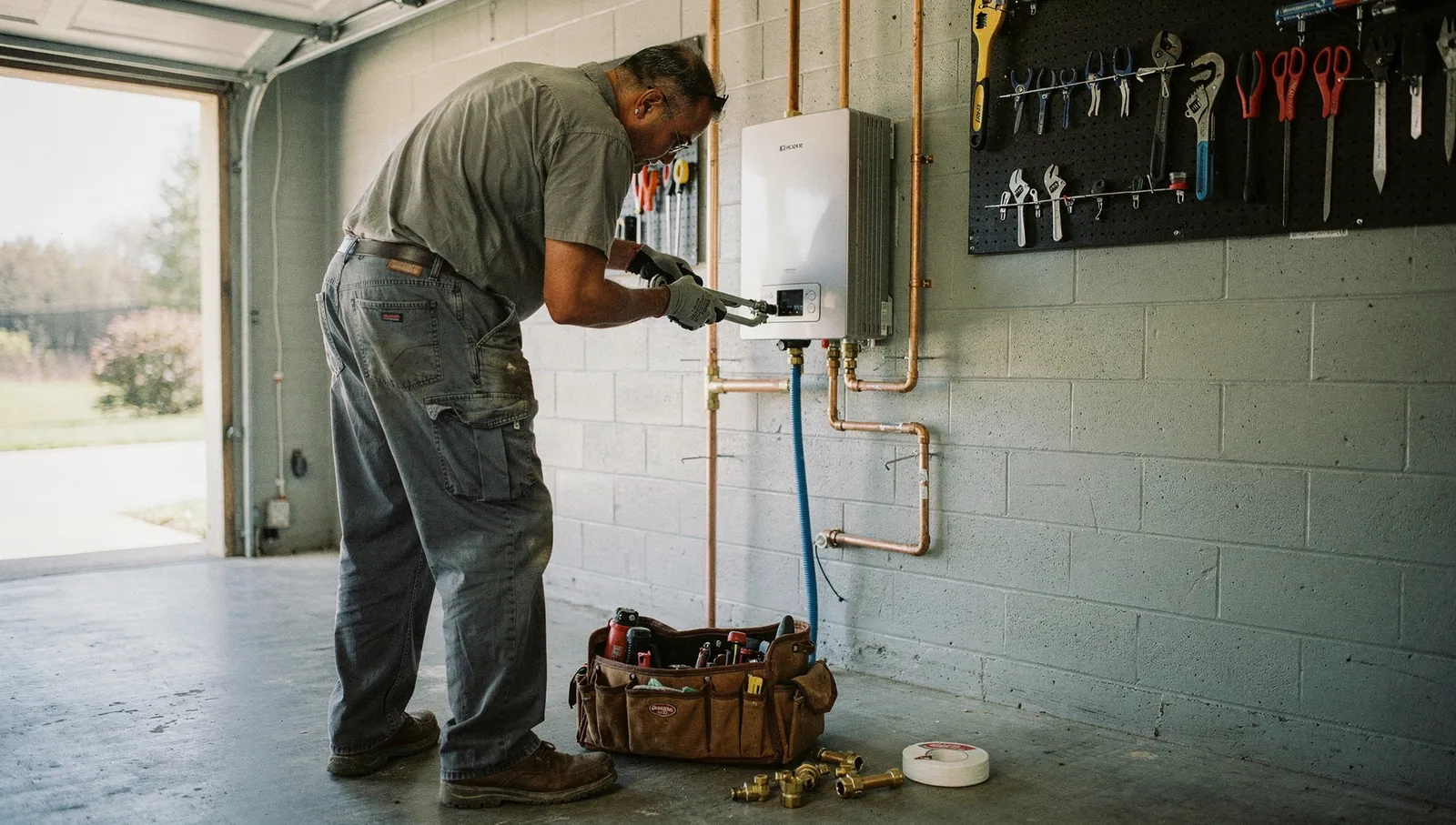
Water Heater Type Selection Based on Home Size and Usage Patterns#
Not all water heaters are the same. The choice between a traditional tank unit, a tankless (on-demand) model, or a hybrid heat-pump unit depends on your home's size, the number of people in your household, and your hot water usage pattern.
A traditional tank water heater stores a standard capacity of hot water and reheats it continuously to maintain temperature. It is the least expensive to install and works well for households with moderate, predictable hot water demand. A tankless water heater heats water on demand as it flows through the unit, uses less energy when demand is low, and lasts for decades, but costs more upfront and may require upgrades to gas lines or electrical capacity. A heat-pump water heater uses ambient air to heat water, delivering the highest efficiency, but is the most expensive option and requires adequate space and ventilation.
Your contractor can help you size the right unit for your home. Provide them with information about your household size, your typical hot water usage (number of showers, baths, and loads of laundry per day), and your budget. They will recommend a unit that meets your demand without oversizing (which wastes energy) or undersizing (which leaves you with cold showers).
Post-Replacement Maintenance to Maximize Unit Lifespan#
A new water heater is not a set-it-and-forget-it appliance. Simple maintenance practices extend its lifespan and keep it running efficiently.
Flush the tank annually to remove sediment buildup, as noted above, mineral deposits and rust particles accumulate and reduce efficiency. Inspect the anode rod every few years; if it is heavily corroded, replace it, this sacrificial component protects the tank from rust and is far cheaper to replace than the tank itself. Check the temperature and pressure relief valve annually to ensure it opens freely. Set the thermostat to a moderate temperature that avoids excess energy waste and wear.
Keep the area around the water heater clear of clutter and ensure adequate ventilation, especially for gas-fired units. If your water heater is in a basement or crawl space, check it after heavy rains or flooding to ensure the base is dry.
A water heater that receives this level of attention will reliably deliver hot water for its full expected lifespan, about 8 to 12 years for a traditional tank unit, up to 20 years for a tankless model. The small investment in maintenance pays for itself many times over in avoided emergency repairs and extended service life.
Your Next Step: Assess Your Unit Now#
Do not wait for failure. Take these actions this week:
Locate your water heater and check its age. Find the manufacturer's label and decode the serial number to determine the year it was installed. If it is past 10 years old, begin planning for replacement.
Inspect for visible warning signs. Look for leaks, corrosion, rust stains, or mineral deposits around the tank and fittings. Listen for rumbling or popping noises during a heating cycle. Note any recent changes in hot water temperature or supply.
Document recent repair history. If you have had repairs done in the past couple of years, gather the invoices and add up the total cost. This number is critical to the repair-versus-replace decision.
Schedule a professional inspection. Contact a vetted local contractor and request a written assessment of your unit's condition, expected remaining lifespan, and repair versus replacement costs. This inspection gives you the information you need to make a confident decision on your own timeline, not under emergency pressure.
A water heater that is failing sends signals. Recognizing those signals early, and acting on them with a transparent contractor assessment, is the difference between a planned upgrade and a costly emergency. Home projects, handled, join the list and we'll connect you with vetted local crews already working nearby.
| Heater Type | Expected Lifespan | Replacement Trigger |
|---|---|---|
| Traditional Tank | 8–12 years | 10 years (U.S. Department of Energy) |
| Tankless | Up to 20 years | Outlasts tank models significantly |
| Warning Sign | What It Indicates | Action Required |
|---|---|---|
| Age over 10 years | Unit has passed most of expected service life | Begin planning replacement |
| Leaks at tank base | Internal corrosion; tank integrity compromised | Call contractor within days |
| Visible corrosion or rust stains | Protective coating worn away; structural failure imminent | Schedule inspection |
| Erratic temperature delivery | Thermostat, heating element, or sediment buildup failing | Test persistence; contact contractor |
| Hot water supply shrinking | Internal component degradation reducing capacity | Professional assessment needed |
| White mineral deposits on fittings | Hard water mineral accumulation; coating erosion | Inspect for active leaks |
| Decision Factor | Favors Repair | Favors Replacement |
|---|---|---|
| Unit Age | Under 8 years with minor issue | 10+ years or multiple signs present |
| Leak Status | Condensation only or isolated small drip | Persistent wet spot or corrosion visible |
| Temperature Performance | Adjustable via thermostat; isolated incidents | Erratic despite adjustment; worsening pattern |
| Cost Consideration | Repair cost << replacement cost | Emergency replacement unavoidable; plan now |
| Time Availability | Scheduled professional inspection possible | Emergency call-out imminent; premium rates apply |
Water Heater Repair vs. Replace Decision Calculator
Evaluates the standard industry '50% Rule' / 'Age x Repair Cost' rule ($5,000 index rule) and calculates simple payback on energy efficiency improvements from installing a new unit.
Age × Repair Cost Index:
Recommend Replacement (1 = Yes, 0 = No):
Net Replacement Cost:
Annual Operating Savings:
Energy Payback Period:
Frequently Asked Questions
What is the average lifespan of a home water heater?
Traditional tank water heaters typically last around 8 to 12 years. Tankless models extend considerably further, reaching up to 20 years. Age alone does not guarantee failure, but units past 10 years have already survived most of their expected service life and face sharply climbing failure probability.
What are the specific warning signs that my water heater is about to fail?
Primary signs include age exceeding 10 years, persistent leaks or puddles around the tank base, visible corrosion or rust stains on the exterior, erratic temperature delivery, shrinking hot water supply despite unchanged usage, and white mineral deposits crusted around fittings. Any of these warrants a professional inspection.
How do I know if a repair will cost more than replacing the unit?
A water heater typically warrants replacement rather than repair once it exceeds more than 10 years of age, according to the US Department of Energy. Additional signs pointing toward replacement include leaks around the tank base or erratic operation. Request written estimates from your contractor itemizing repair versus replacement costs, expected lifespan, and warranty coverage to make an informed decision based on your timeline and budget.
What is the financial benefit of switching to an energy-efficient water heater?
Upgrading to an Energy Star natural gas water heater instead of a standard model yields a 13 to 18 percent return on investment at average product lifetimes and usage rates.
Why is early detection better than waiting for complete failure?
Early detection lets you compare contractors and options on your timeline and budget. Waiting for catastrophic failure forces emergency call-outs at premium labor rates with limited contractor availability. Water damage from a rupture can exceed the cost of the heater itself, making planned replacement far more economical.
How do I find my water heater's age?
Check the manufacturer's label on the upper third of the tank. The serial number's first digit or first two digits typically encode the year of manufacture. Once the unit reaches more than 10 years, begin planning replacement rather than waiting for emergency failure.
Sources
- [PDF] EVIDENCE FROM A FIELD EXPERIMENT Hunt Allcott Rich - NBER - Nber (2014-04-01)
- Should You Repair or Replace Your Water Heater? 6 Signs It’s Time - Bradford White Water Heaters - Bradfordwhite (2026-09-09)
- The Top Signs You Need to Replace Your Water Heater - Bensproserv (2026-09-09)